Mapping the World of Art: Part VI — The Liberation of the Frame
← Part V — The Imperial Eye
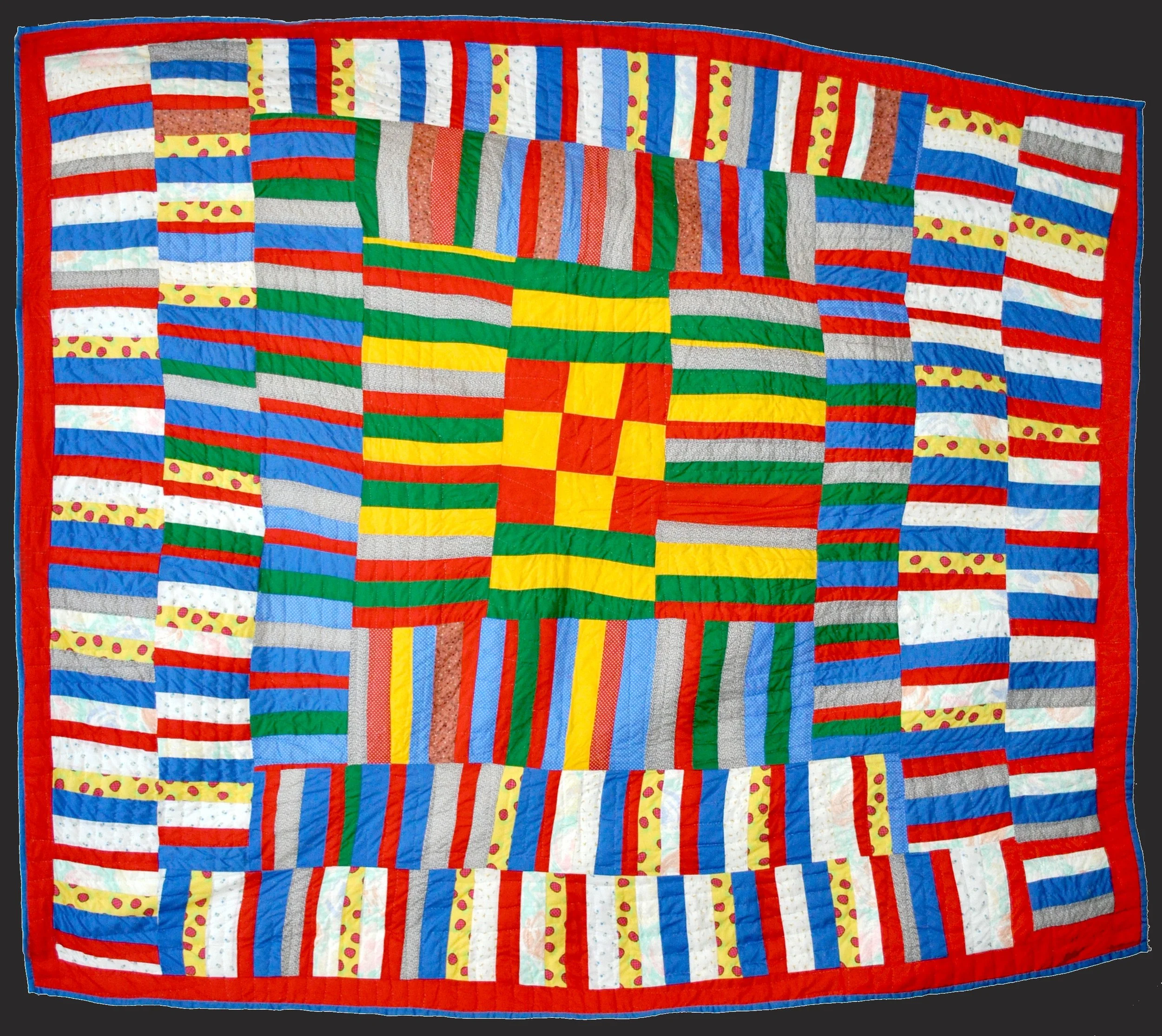
Gee's Bend quilts by Lucy Mingo, c. 1979. Gee’s Bend quilts organize fragments, rhythm, memory, and improvisation into highly sophisticated visual structures rooted in Black Southern experience and survival.
For centuries, Western art was trapped inside an illusion.
It was an illusion built on the absolute authority of the single viewpoint. The Renaissance window insisted that space was flat, orderly, and measurable. It demanded that the viewer stand perfectly still, staring at a frozen world from a fixed horizon. This way of seeing would eventually align closely with systems of mapping, ownership, and empire. But by the early twentieth century, that illusion finally collapsed under the weight of its own limitations.
The Western world was in an existential crisis. The rapid violence of industrialization, the chaos of exploding cities, and the industrialized slaughter of World War I made Europe’s neat, stable "window" look like a total lie. The world was fractured, moving too fast, and splitting at the seams. Western artists desperately needed a visual language that could handle a broken world—a language that could hold multiple, competing truths inside the same frame.
To find it, they had to look outside of Europe. They had to look toward a system that had always been freer than their own.
The Myth of the Avant-Garde "Discovery"
Standard art history tells a specific story about this moment claiming that around 1907, European geniuses like Pablo Picasso "discovered" African masks in Paris museums, and that this encounter inspired them to invent Cubism—shattering the Renaissance frame by breaking faces and objects into overlapping, geometric planes.
But to be clear: Europe did not invent the broken frame.

La ville by Fernand Léger. Modernist artists developed fragmented visual languages to represent a world transformed by industrialization, mechanization, and social upheaval. Public domain image via the Bibliothèque nationale de France.
The abstract, multi-perspective technologies that Western artists scrambled to learn in the twentieth century were systems that African carvers had mastered centuries earlier. African artists had long rejected the optical limitation of the single, frozen moment. They understood that a human being or an object cannot be understood from one static angle.
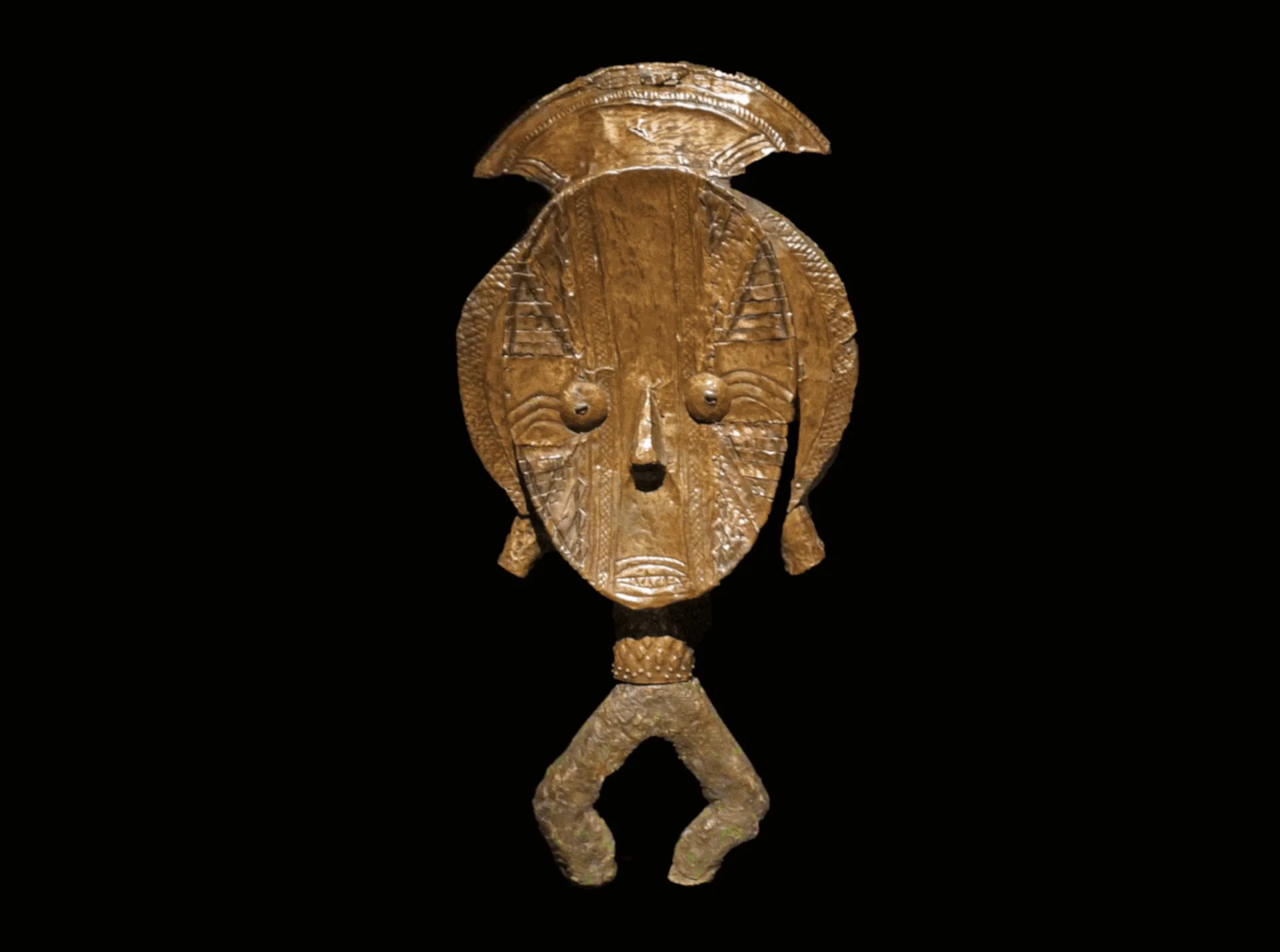
Obamba reliquary guardian figure, Gabon, 19th–early 20th century. Musée du quai Branly. Photograph by Ji-Elle via Wikimedia Commons (CC BY-SA 3.0).
A West African reliquary figure or a Dan mask wasn't abstract because the artist lacked the skill to make it look "realistic." It was abstract because it was engineered to represent things the eye cannot see: lineage, spiritual velocity, cosmic law, and historical memory. African carvers compressed time and space into a single piece of wood.
Western modernists engaged with an African technology of representation that they were only beginning to comprehend.
The Colonial Irony
There is a profound, violent irony in this chapter of art history. The African sculptures flowing into Paris and London workshops weren't gifts; they were loot. They were entering Europe through the brutal machinery of empire—stolen during colonial expeditions and military raids, like the British sacking of Benin in 1897.
While European avant-garde artists were using African aesthetics to liberate themselves from the rigid "window" of their own art history, Western empires were busy using their military and administrative grids to colonize and cage the African continent. European modernists drew heavily from visual traditions emerging from cultures that colonial systems were simultaneously exploiting and suppressing.
The Fractured World of the Delta
This brings us directly to the soil of the American South. The common assumption is that sophisticated European modernism eventually trickled down to influence Black culture in the United States. But the reality is closer to the reverse.
The fractured, layered experience that modernism struggled to represent was already deeply embedded in the historical realities of Black life in the Delta.
When a history has been violently disrupted, when family lines have been systematically severed by the auction block, and when labor is exploited by the plantation, one cannot use a calm, singular Renaissance viewpoint to tell one’s story. A singular viewpoint requires stability. For Black people in the Delta, survival required a completely different strategy: learning how to piece a shattered reality back together into a new kind of coherence.
A Delta quilt does not function like a Renaissance window. It was made to hold history by taking fragments—scraps of faded work clothes, old denim, blankets—organized into an asymmetrical, highly sophisticated geometric rhythm that allowed multiple histories, textures, and memories to exist side by side in the same object.
Similarly, the structure of the Blues layers sorrow and joy, the immediate pain of the present and the ancestral memory of the past, into the very same musical bar.
The broken frame isn't an elite artistic trend invented in a Parisian studio. In the Delta, the broken frame has been a weapon of cultural survival and self-determination.
Where Are We?
The authority of the single Western frame has begun to weaken. The window is shattered, and the artificial boundary between ‘high art’ and ‘primitive art’ begins to reveal itself as a constructed hierarchy rather than a natural truth.
Now that the frame is broken, it cannot be repaired. But as you will see when we move into the mid-twentieth century, the question shifts from how to break the frame to what gets built in its place.
In Part VII, we move directly into the fire of the Harlem Renaissance where Black artists stop fighting for space inside the Western window and instead build an entirely new architecture of representation on their own terms.