Mapping the World of Art: Part V — The Constructed World
← Part IV — The Observed World
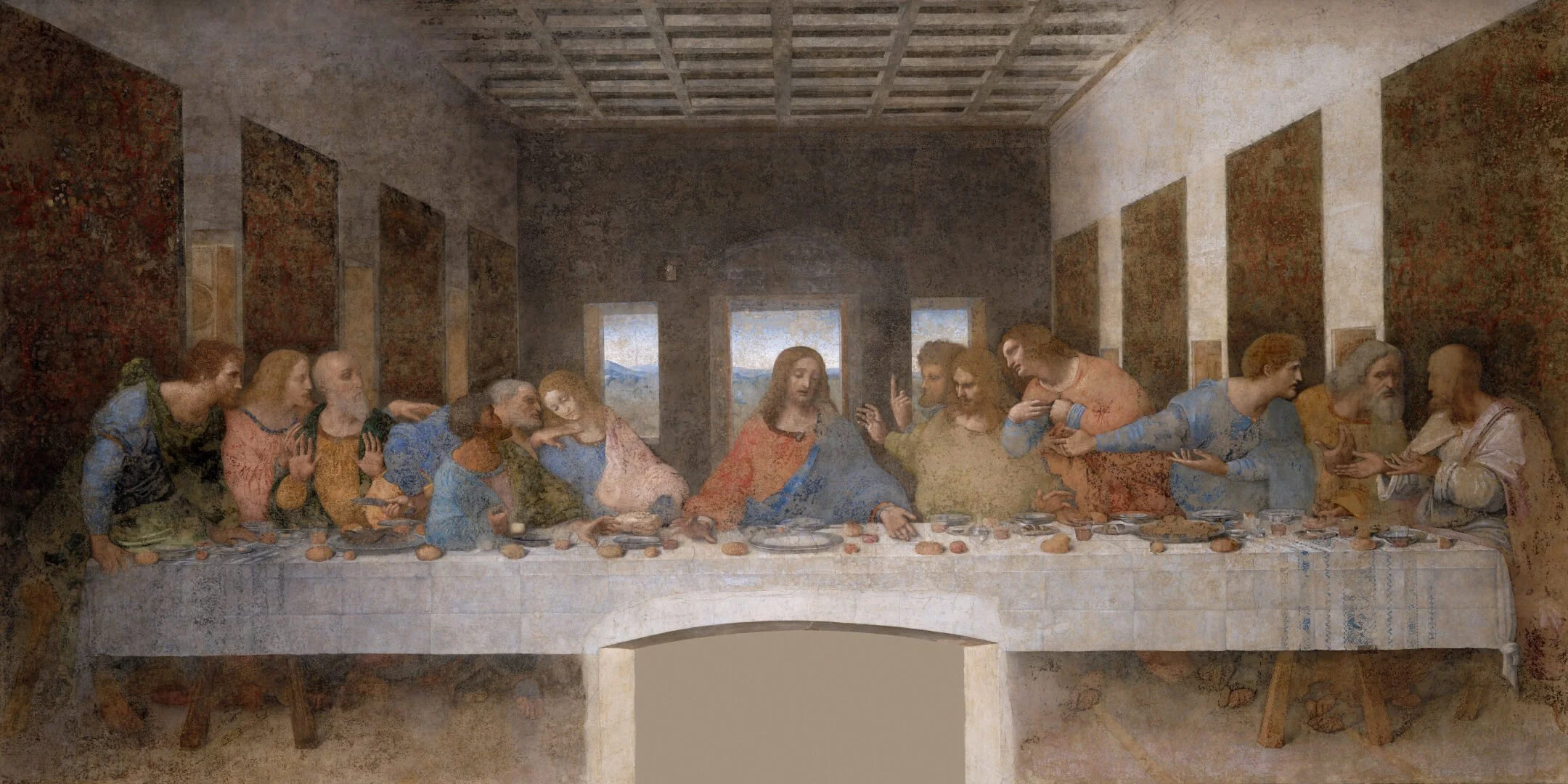
The Last Supper by Leonardo da Vinci (1495–1498). All lines converge toward a single vanishing point, organizing the entire scene around a fixed viewer and creating the illusion of a unified, coherent space. Credit: The Last Supper, Leonardo da Vinci, 1495–1498. Public domain.
In Part IV, we saw how Greek artists transformed the human body into a system—measured, balanced, and idealized. What appeared natural was, in fact, carefully constructed. We also confronted a difficult idea: when something looks real enough, we stop questioning how it was made.
Now, that system expands. We are no longer organizing the body. We are organizing the entire world.
During the Renaissance, artists developed a method that allowed them to construct space with remarkable precision. This method, known as linear perspective, made it possible to create the illusion of depth on a flat surface. Parallel lines were drawn so that they appeared to converge toward a single point on the horizon—the vanishing point. Objects diminished in size as they receded. Space became measurable, predictable, and ordered.
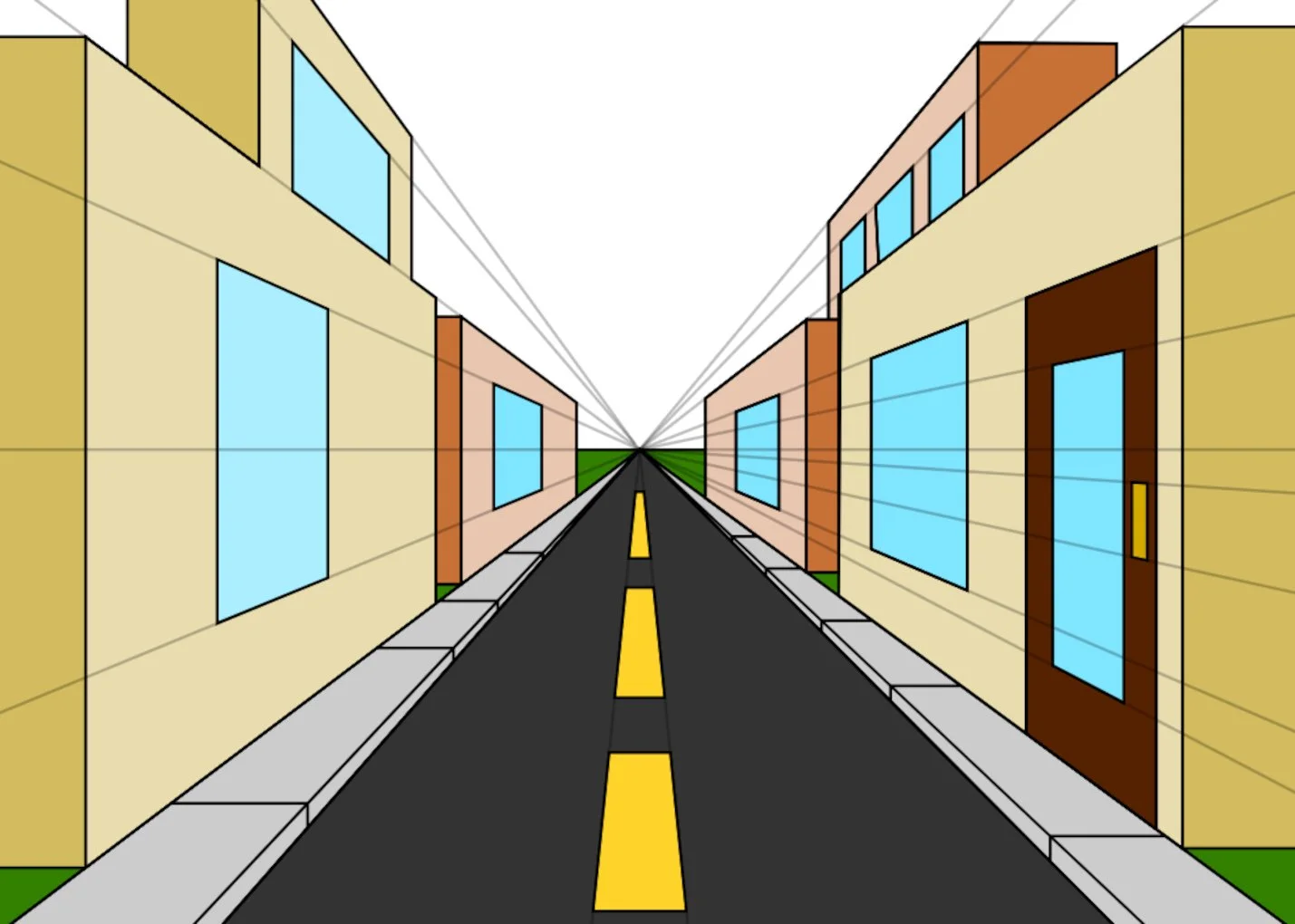
A simple demonstration of one-point perspective. All orthogonal lines converge toward a single vanishing point, creating the illusion of depth on a flat surface. Credit: Perspective diagram by Braindrain0000. Licensed under CC BY-SA 3.0.
In works like The Last Supper, all lines converge toward a single point, drawing the viewer into a carefully constructed environment that feels stable, coherent, and complete. The painting no longer functions as a surface. It becomes a window.
This development did more than improve representation. It changed the position of the viewer.
In earlier systems, images organized the world according to hierarchy, symbolism, or belief. In Renaissance perspective, the viewer becomes the fixed point around which everything is arranged. The entire image is calibrated to a single set of eyes. If you shift your position, the illusion begins to falter. The system depends on your stillness. It places you in a specific location and builds the world outward from there.
This creates a powerful way of seeing—one that organizes reality from a single, stable viewpoint. It allows the viewer to survey space, to measure it, to understand it as something that can be grasped in its entirety from one position. But like every system we have encountered, this one involves selection.
Perspective prioritizes clarity, coherence, and spatial order while reducing other possibilities—shifting viewpoints, overlapping perspectives, and multiple simultaneous ways of seeing. These ways of representing the world are no longer recognized within this particular frame.
Over time, linear perspective became dominant within certain traditions. Because it looked so convincing, it was often treated as the most accurate way to represent reality, helping to shape which kinds of images were recognized as “fine art,” and which were left outside that category. This was not simply a matter of technique—it was the formation of a standard.
That standard influenced how other visual traditions were understood. Art that did not conform to a single viewpoint or linear space—such as aspects of African sculpture or indigenous textile design—was often interpreted through this lens and judged accordingly. What we are seeing here is not just a way of drawing, but a framework that shaped perception itself.
And yet, not all traditions approached space in this way.
While a Renaissance painter organized the world for a fixed viewer, many West African sculptural traditions—such as Dan masks—were experienced in motion. These works were not meant to be seen from a single position. They were worn, performed, and encountered over time, revealing different aspects as the viewer moved. One approach constructs a stable window. The other creates an unfolding encounter.
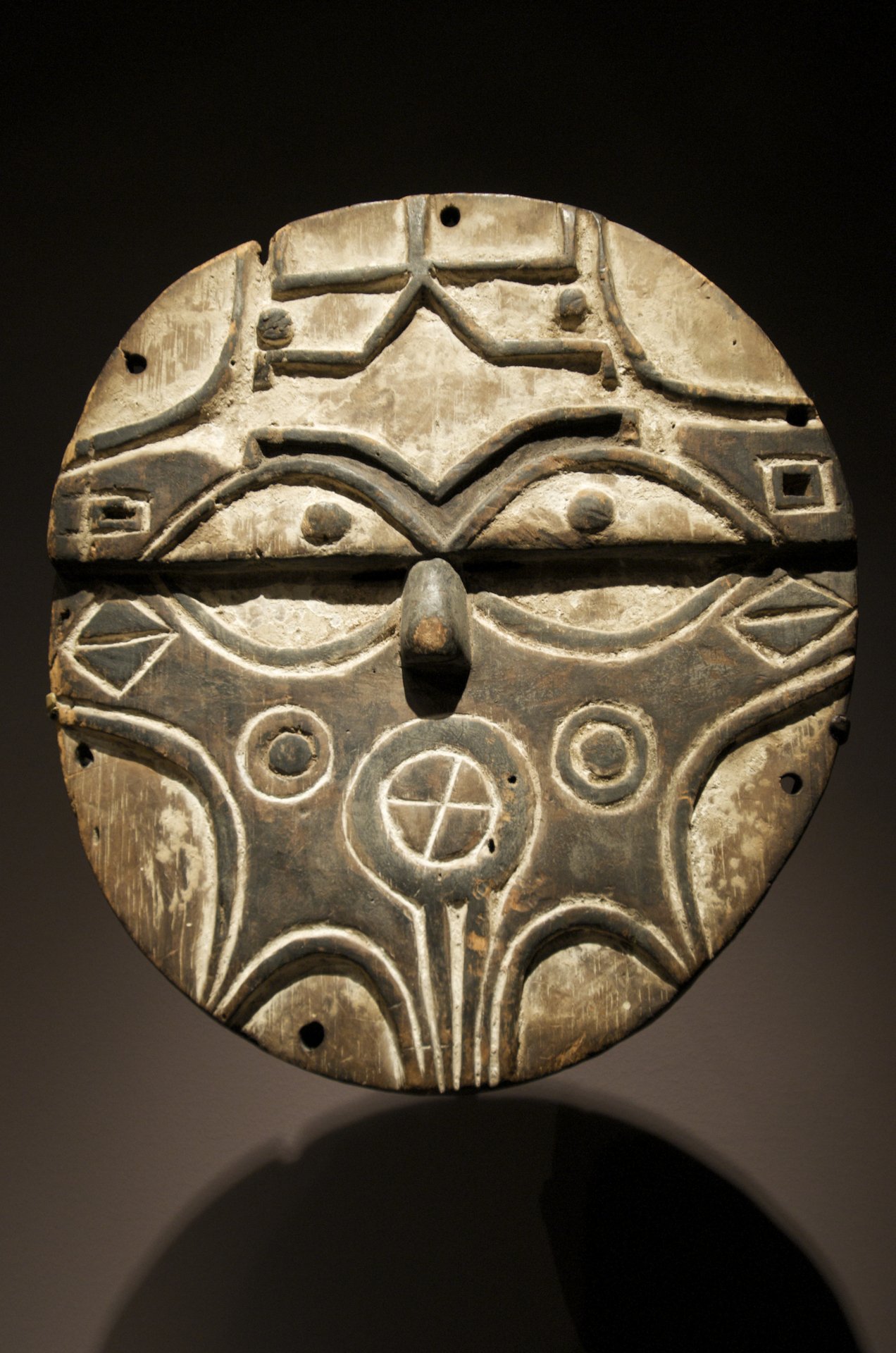
West African mask. While presented here from a single viewpoint, such works are often experienced in motion—worn, performed, and encountered from multiple angles over time. Credit: African mask. Photo by Peter Rivera. Licensed under CC BY 2.0.
At the Northeast Louisiana Delta African-American Heritage Museum, this distinction matters.
The history of the Delta is not a straight line receding toward a single point. It moves like the river itself—shaped by migration, layered with memory, and carried forward through generations. It cannot be contained within a fixed vanishing point. When we look at a quilt, a collage, or a portrait shaped by lived experience, we are not witnessing a failure of perspective. We are encountering a different way of organizing the world—one that allows for overlap, movement, and multiple viewpoints to exist at once.
What changes is not the work itself, but how we understand what we are looking at.
You are now standing at the height of the constructed world. You have seen how artists developed a system capable of organizing space, positioning the viewer, and creating a convincing illusion of reality. That system will shape visual culture for centuries—but it will not go unchallenged.
A breaking point is coming.
As artists begin to question the authority of a single viewpoint, the idea of a fixed observer, and the assumption that reality can be contained within a single frame, the image itself begins to shift. Movements such as Cubism emerge, exploring the possibility of seeing from multiple positions at once. Twentieth-century artists draw from traditions that approached form and space differently, and the window—the illusion we have been taught to trust—begins to fracture.
The question changes.
What does it mean to see from more than one position at the same time?