Mapping the World of Art: Part IV — The Observed World
← Part III — The Eternal Grid
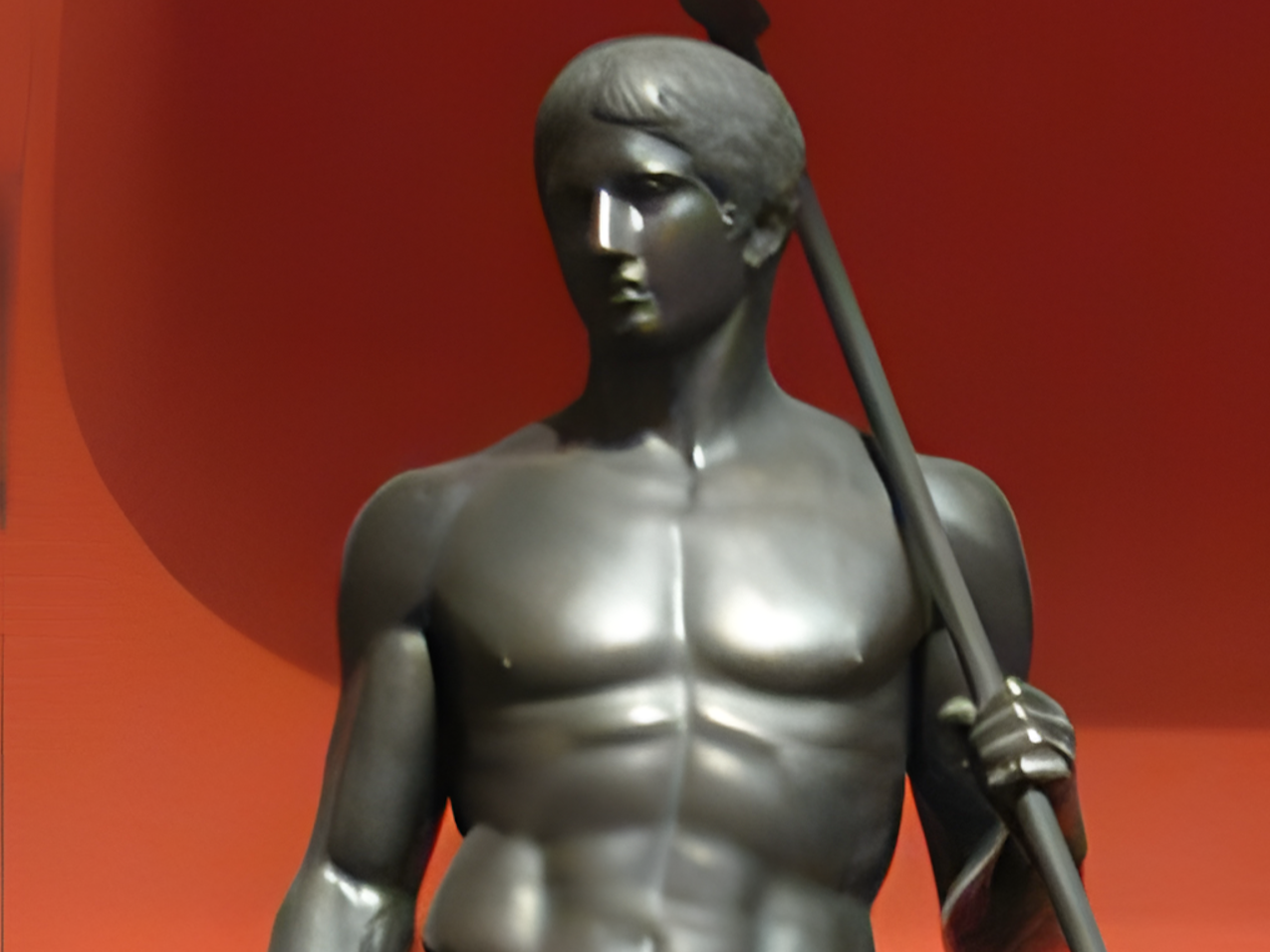
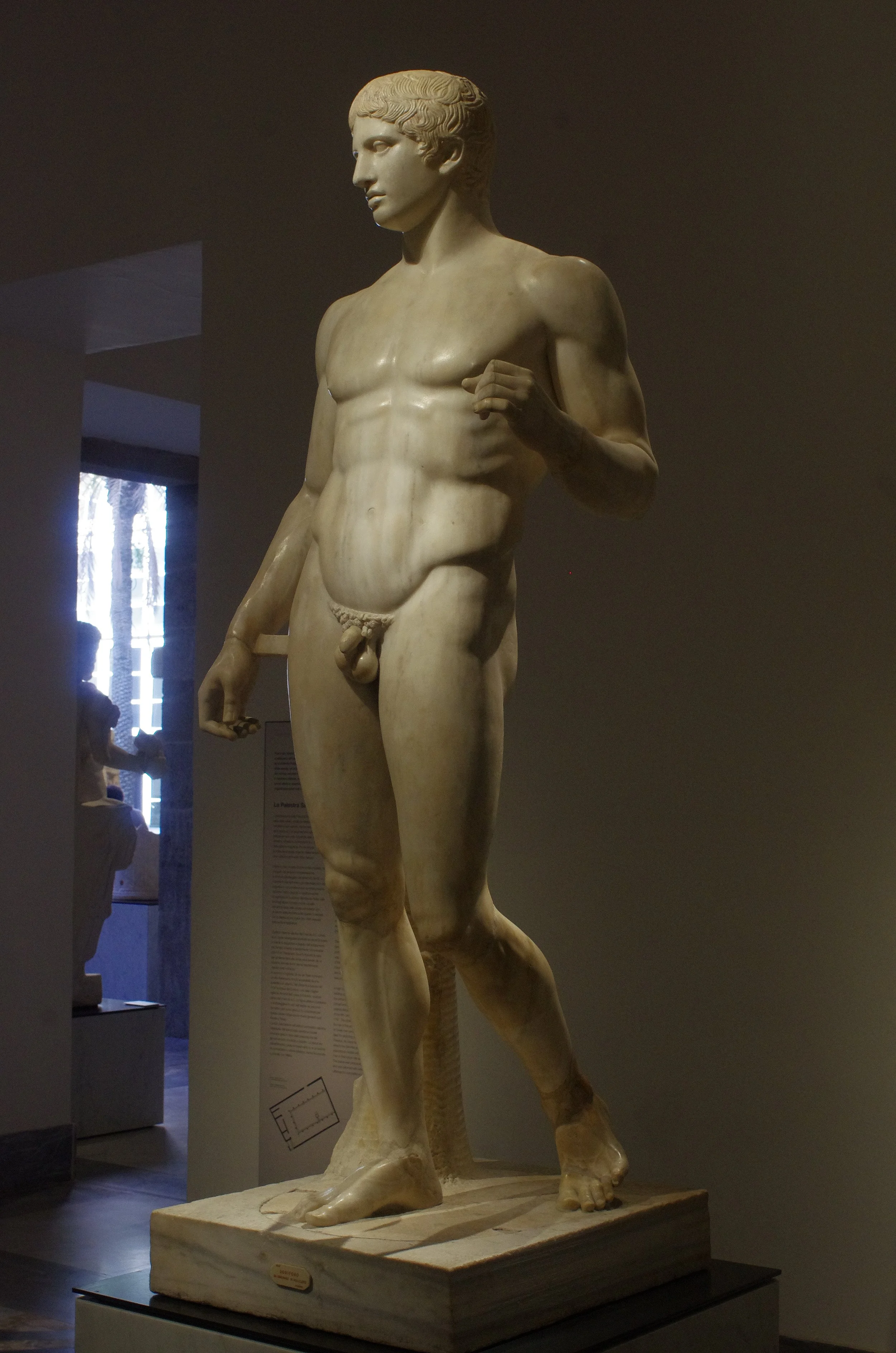
Doryphoros, attributed to Polykleitos. A demonstration of contrapposto and the canon of proportions—an idealized system that appears natural but is carefully constructed. Credit: Image by Shakko, via Wikimedia Commons. Licensed under CC BY 3.0.
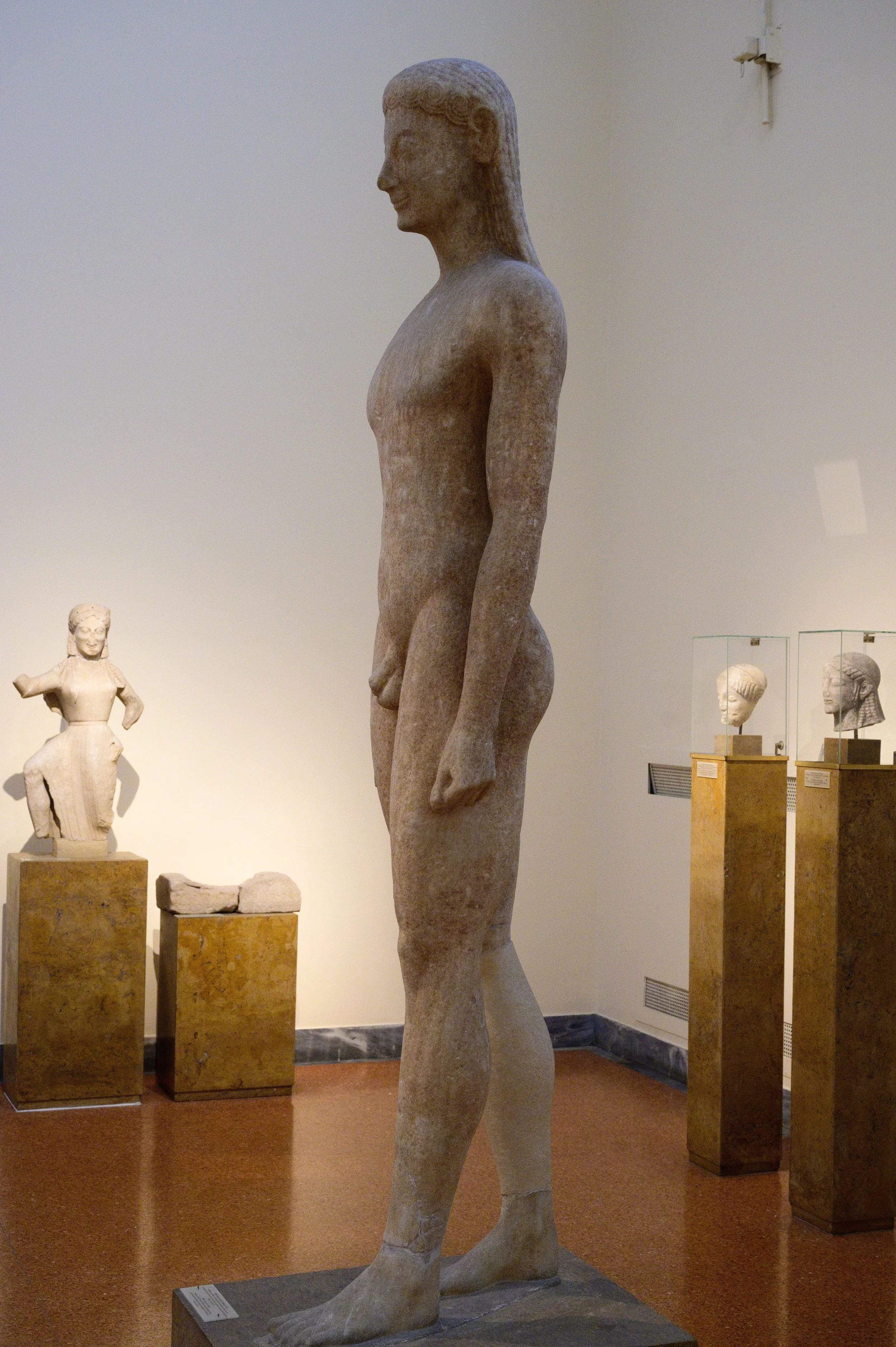
In our previous posts, we stood inside structured systems—what we called the “grid.” We saw how cultures like Egypt and Nubia used visual conventions to express permanence, hierarchy, and cosmic order. We also arrived at a critical idea: seeing is not neutral. It is learned.
Now we move into a world where that grid appears to dissolve. We are entering Ancient Greece—the place where art history has often claimed that humanity “discovered” how to see the world as it truly is. But as we’ve seen before, whenever something presents itself as “the truth,” it becomes worth asking how it was constructed.
The Illusion of the “Living” Stone
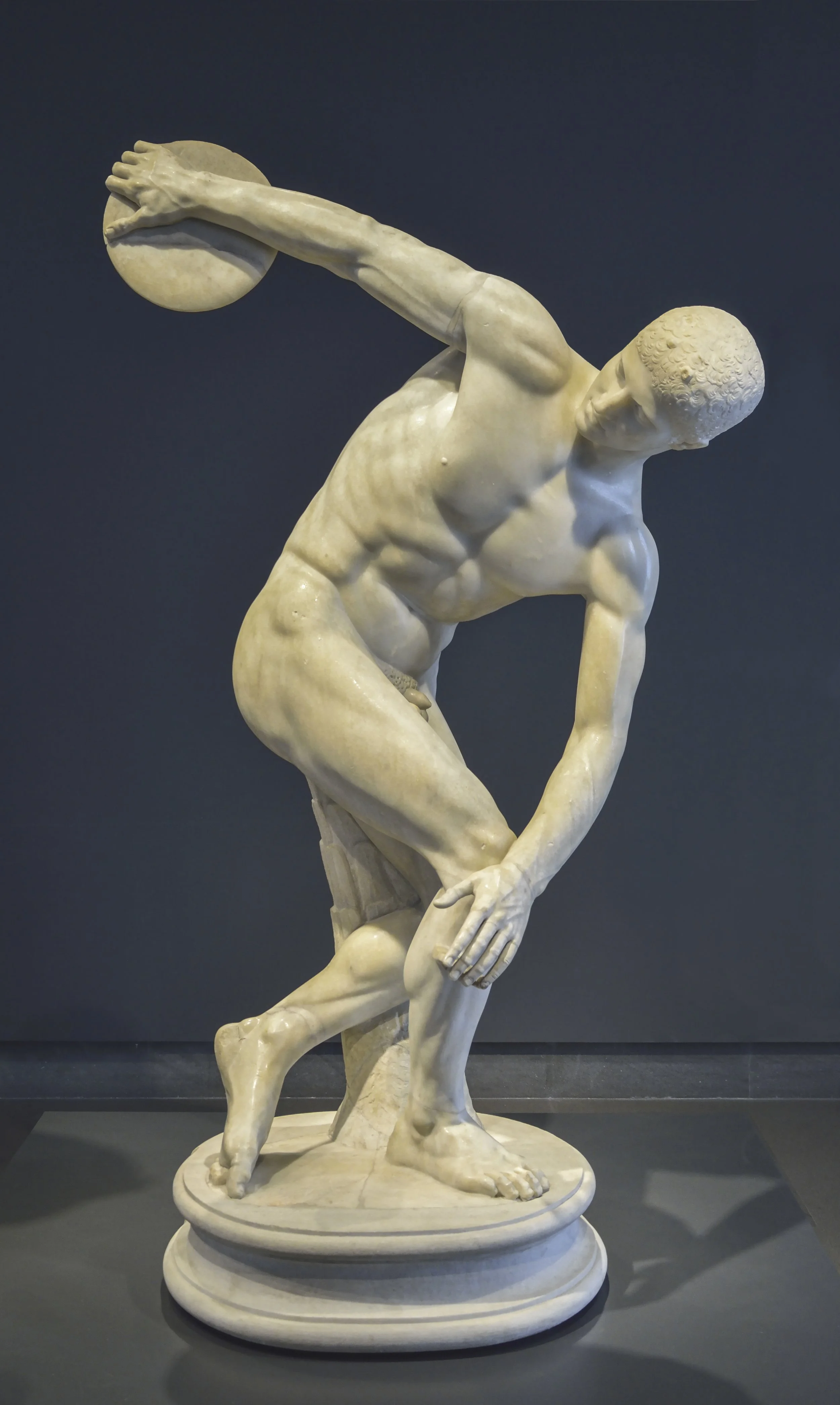
Imagine standing in a Greek plaza around 450 BCE. For the first time, you are not looking at a fixed, frontal figure. You are looking at a body that seems to breathe—its weight shifts, its torso turns. The figure appears to exist within time, not outside of it.
This effect is achieved through a technical development known as contrapposto—a counterbalance of weight where one leg bears the load, the hips tilt, the spine curves, and the shoulders adjust in response. It feels natural, but it is carefully constructed. This is not simply “better” drawing. It is a new technology of representation—one that creates the illusion of life by capturing the body in a moment of transition.
The New System: The Math of “Perfection”
It is tempting to think that Greek artists simply began observing the human body more accurately. But they were still working within a system. It was simply less visible.
The sculptor Polykleitos developed what is known as a canon—a set of proportional relationships where, for example, the height of the entire body was exactly seven “heads” tall. The body becomes measurable. Repeatable. Idealized. Because these figures look so convincing, it is easy to assume they are “natural.” But look closer.
They show no age. No scars. No irregularities. No variation in body type. They are not average bodies. They are perfected ones. This creates what we might call a naturalism trap—a system that appears to reflect reality, but is actually constructing an ideal.
The Power of the “Standard”
What happens when one way of seeing begins to stand in for reality itself? It becomes a standard against which other forms of art are judged.
Over time, the Greek approach to representing the human body came to be widely valued—especially in later European traditions. The closer a work aligned with the later ideal of the white marble Greek figure, the more it was associated with refinement or cultural advancement. This, in turn, shaped how people were taught to look.
Work that did not align with that framework was often labeled “primitive” or “distorted”—terms that reveal the limits of the system used to evaluate them, rather than the complexity of the work itself. A particular visual language—one rooted in a specific time and place—came to influence how entire cultures were seen and understood.
A System of Selection
Every system involves selection. Egyptian systems prioritized permanence and order. Greek systems prioritized proportion, balance, and the body in motion. When one set of priorities becomes dominant, others can become less visible. This does not mean they disappear. It means they are no longer recognized within that particular frame.
Why This Matters in the Delta
At the Northeast Louisiana Delta African-American Heritage Museum, this question of visibility is central. When we recognize that Greek naturalism is one system among many—not a universal standard—we open the door to seeing differently.
We begin to understand that the visual language of a Nubian pharaoh is not a failure of observation, but a deliberate expression of stability and power. We can see a Delta quilt or a sharecropper’s portrait not as something outside the history of art, but as a sophisticated visual language shaped by memory, necessity, and lived experience.
What changes is not the work, but how we are able to see it.
Where Are You?
You are now in a world where observation itself has become a method. Where the human body is studied, measured, and organized into a system that appears natural—but is carefully constructed. This system will prove to be incredibly influential.
It will be revived, reinterpreted, and expanded during the Renaissance, where artists combine this approach with new ways of organizing space. We are moving from how we see the body—to how we construct the world around it.