Mapping the World of Art: Part II — Before "Art"
← Part I — You Are Here
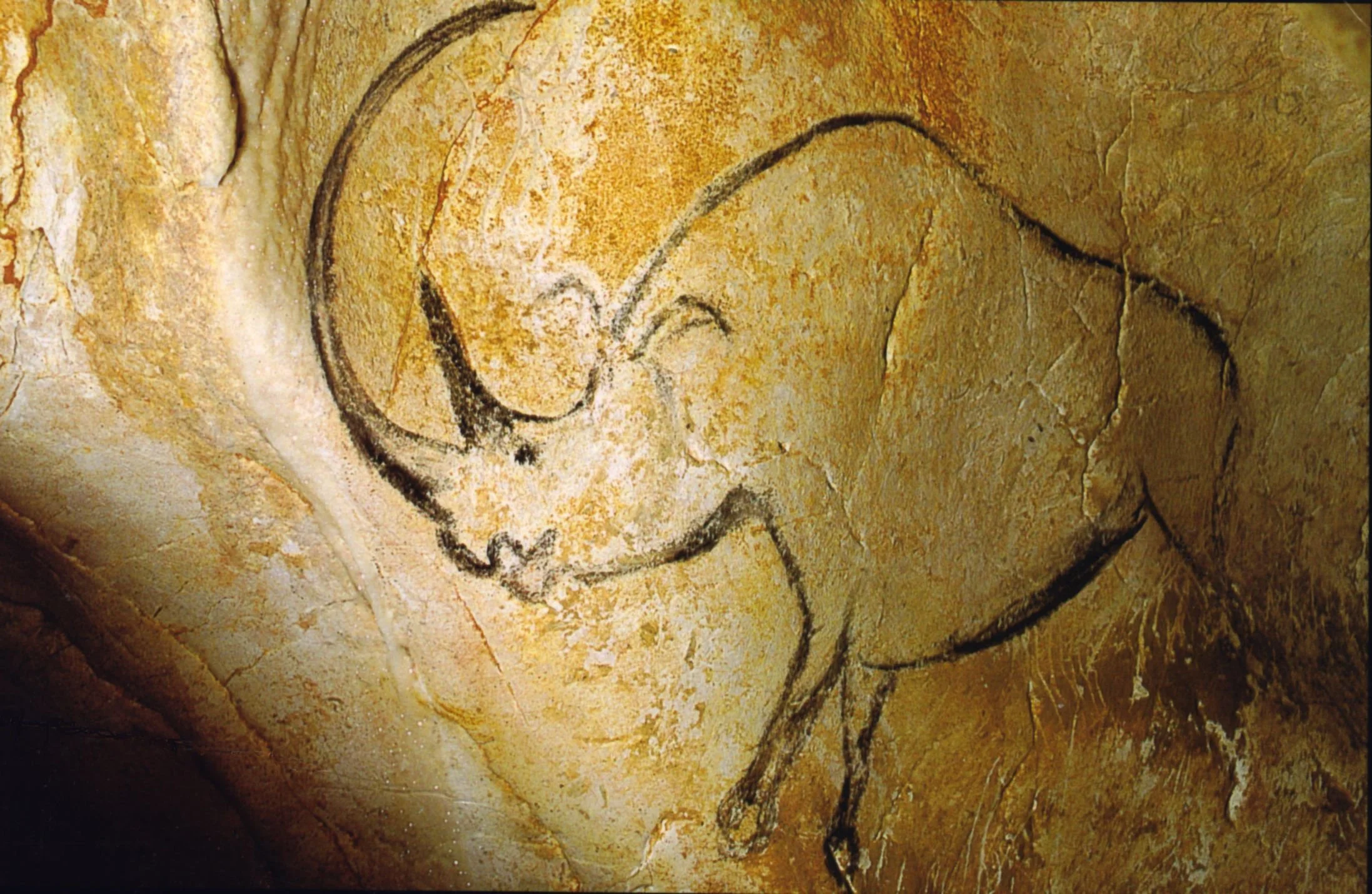
A rhinoceros drawn on the walls of Chauvet Cave over 30,000 years ago—evidence of early human image-making long before the concept of art existed. Woolly rhinoceros, Chauvet Cave (France). Public domain.
Imagine stepping into the Chauvet Cave in southern France. The walls are uneven. The air is still. And on the surface in front of you are images: horses, lions, rhinoceroses — rendered with a confidence that stops you cold. These paintings are over 36,000 years old. Some figures are shaded. Some show movement. The artists who made them understood something about representation that we tend to assume came much later.
Long before the word art existed, human beings were already making images.
If we begin at the beginning, we do not begin with a movement or a style. We begin with people. Current scientific understanding tells us that human life as we know it began on the African continent — and that over time, human beings moved outward across the globe, carrying with them not only the ability to survive, but the capability for symbolic thought.
The evidence of that capacity is older than most people expect.
At Blombos Cave in South Africa, archaeologists have found ochre engravings etched in geometric patterns dating to approximately 75,000 years ago — tens of thousands of years before the paintings at Chauvet.
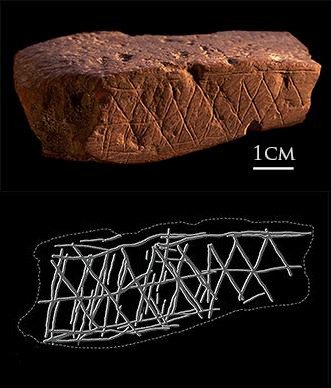
Engraved ochre from Blombos Cave (South Africa), dated to approximately 75,000 years ago—evidence of early human pattern-making and symbolic thought. Ochre engraving from Blombos Cave, by Chris S. Henshilwood. Licensed under CC BY-SA 4.0.
These are not accidental marks. They are deliberate and repeated, which tells us that the impulse to create visual structure was present early, and that it began in Africa.
That impulse did not remain in one place. At sites in Sulawesi, Indonesia, hand stencils and animal figures have been dated to at least 45,500 years ago — older than many of the European cave paintings that once defined the popular understanding of prehistoric art.
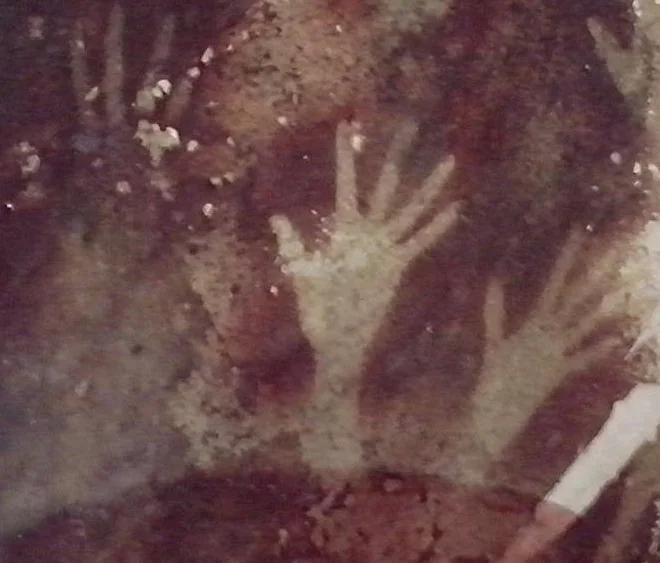
Hand stencils from Sulawesi, Indonesia, dated to at least 45,000 years ago—direct traces of human presence across early image-making traditions. Hand stencils, Pettakere Cave (Sulawesi, Indonesia), by Cahyo Ramadhani. Licensed under CC BY-SA 4.0.
Taken together, these sites point to something important: this was never a single origin story. It was a shared human capacity, expressed independently across continents and across time.
There were no artists in the modern sense of the word. No galleries. No collectors. No critics. No categories. There were only people — using pigment, rock, and whatever was at hand — responding to the world around them, recording what they saw, and interpreting what they could not fully explain.
At this stage, nothing is yet organized into named movements or defined styles. But this is where the foundation is laid — the point at which human beings begin leaving visible traces of thought, observation, and imagination. Those traces will eventually become traditions. And those traditions are what we now call art history.
Where Are You?
You are at the beginning — before art as a concept existed, before anyone thought to name or organize what they were making.
What comes next is the moment when that changes. As human beings built civilizations, image-making became something more structured: connected to belief, to power, to identity. Works were commissioned. Styles were established. Meaning became intentional in new ways.
That is where we are headed. And it is where art history, as we understand it, begins to take shape.