Mapping the World of Art: Part I — You Are Here
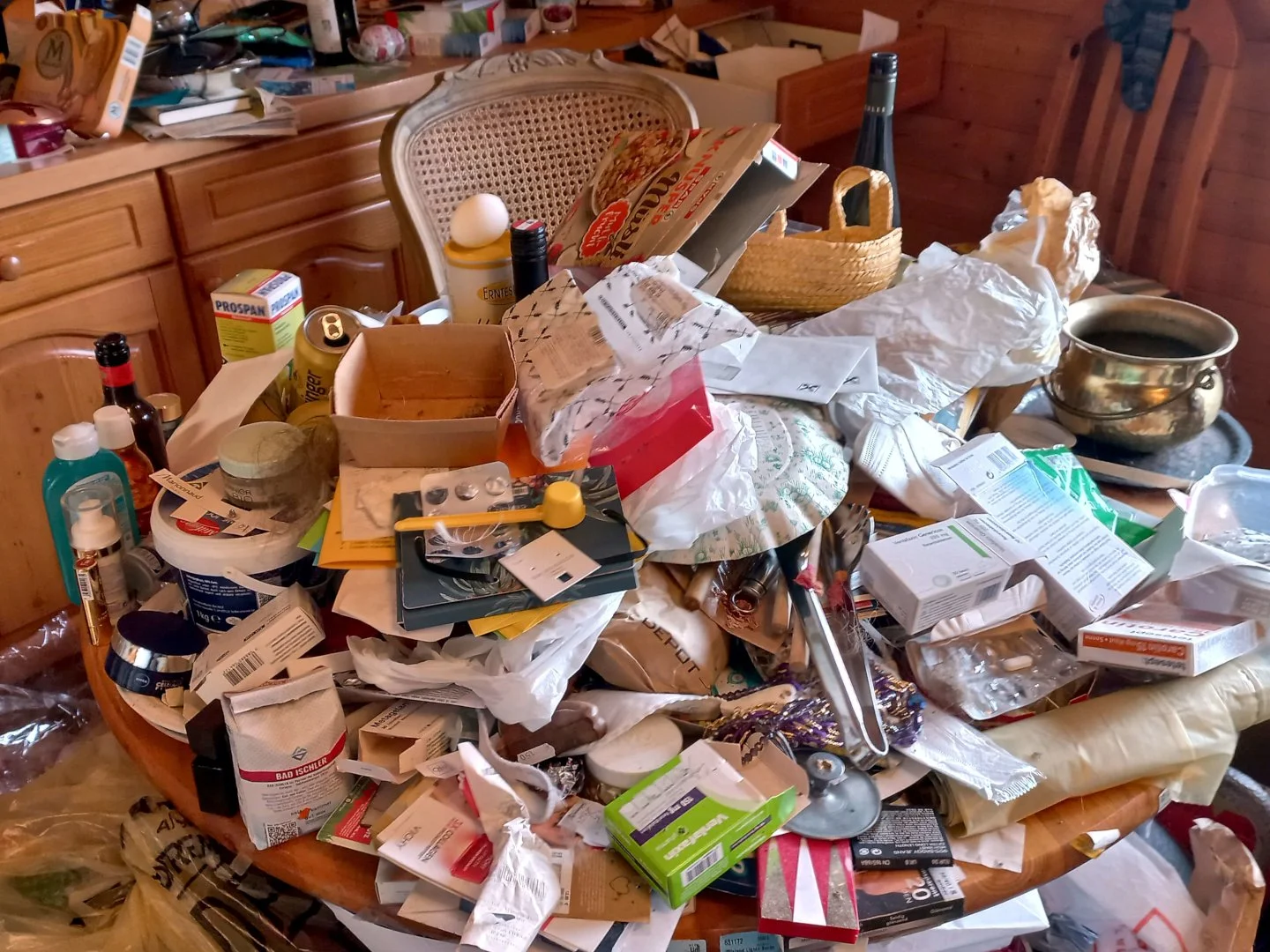
Without structure, even valuable things can become impossible to understand. “Hoarding disorder in an apartment in Bregenz, Austria,” by Asurnipal, via Wikimedia Commons. Licensed under CC BY-SA 4.0 (cropped).
Imagine walking into the home of a hoarder. A place where nothing has ever been thrown away.
Every object—every photograph, every piece of paper, every keepsake—has been kept. Over time, the accumulation has overtaken the space. What may have begun as meaningful things has become something else entirely: dense and overwhelming—a place where everything exists at once, and nothing is clearly seen or understood.
There may be valuables in that space—objects of great importance, even beauty—but without order, they are indistinguishable. Impossible to interpret. You don’t know where to step. You don’t know what is trash or what is treasure. You don’t know where anything came from—or how any of it connects.
Now scale that feeling up.
Imagine that house is not a house, but the entire world—containing every image, artifact, and work of art created across human history. A space like that must be sorted, cleared, and organized.
This is the problem art history attempts to solve.
Because for as long as human beings have existed—across continents and cultures—we’ve been making things: images, objects, markings that reflect how we see the world and our place within it. Without a way to organize it, all of it would exist like that overcrowded space—overwhelming and difficult to make sense of. Important works would be hidden. Relationships between ideas would be unclear. Meaning would be harder to access.
Like a team brought in to address a hoarder’s space, art history groups works into periods, movements, and styles so that we can begin to orient ourselves and move through them with some sense of direction.
Instead of one overwhelming mass, we begin to see distinct areas. We can step into one, understand it, and then move to another. We can trace the development of ideas—how they emerge, evolve, and connect across time—and how different parts of the world contribute to the larger picture.
And just like a space that has been cleared and organized, something changes.

Organization makes meaning visible. “Kitchen in L-shape, 2015,” by Böhringer Friedrich, via Wikimedia Commons. Licensed under CC BY-SA 3.0 (AT).
The big picture comes into view. We can move through it. We can begin to enjoy what’s there.
This series is designed to do exactly that.
Over the next nine posts, we will clear and organize the space of art history—building a map you can actually use. By the end, you won’t just recognize terms like Cubism or Neoclassicism—you’ll understand what they are, where they fit, how they connect, and what they mean within the broader story of human creativity.
That’s what this series is meant to be. Not a lecture. No homework. No list of terms to memorize.
Just a clear sense of where you stand within the vast landscape of art—and the knowledge you need to navigate where you want to go next. Think of it like the map you see in a shopping mall—the one that tells you:
You are here.