Yellow Pigments: A Story of Trade, Toxins, and Toil
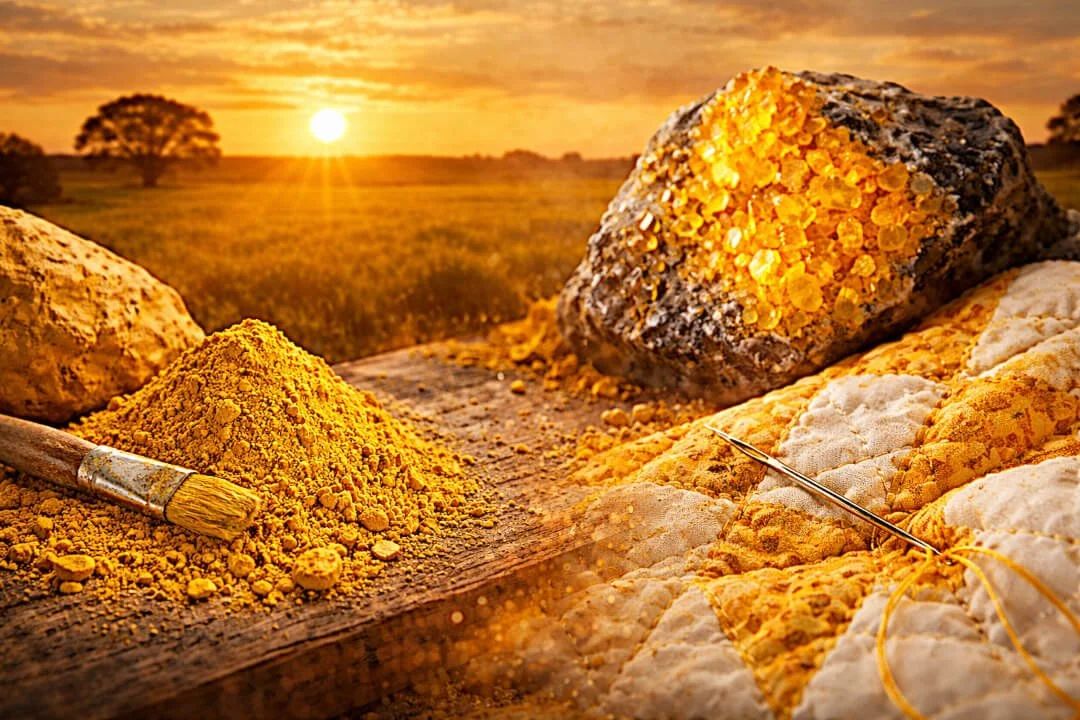
Yellow ochre pigment, orpiment (arsenic sulfide), and a hand-stitched quilt shown under the light of a Delta sunset. Image generated for the Northeast Louisiana Delta African American Heritage Museum.
There is a particular yellow that hangs over the Northeast Louisiana Delta in August. It is the color of the sun at its most unrelenting, of dried corn stalks, of the dust that settles on everything and everyone. And yet yellow is also the color of godliness—of gold leaf on a medieval altarpiece, of the luminous sunflowers painted by Vincent van Gogh.
Yellow is the most contradictory color in the history of art—at once divine and toxic, a symbol of wealth and a flash of hard-won joy. To understand the yellows that appear in the quilts and paintings of this region, we must first understand their strange—and often hazardous—origins.
The Soil
Yellow ochre is a natural earth pigment found across the world. Composed of clay, silica, and hydrated iron oxide—essentially, rust—it is among the oldest pigments used by human beings. It is stable, permanent, and appears in ancient cave paintings from Lascaux to the Australian outback. But its earthiness is also its limitation. For centuries, artists, alchemists, and traders pursued a more luminous yellow, leading to a number of extreme solutions.
Orpiment
One of the earliest alternative yellows was a volcanic mineral composed of arsenic sulfide (As₂S₃). To the eye, orpiment was stunning—a golden yellow that seemed to glow from within. To the body, however, it was a slow poison. Painters who ground it risked their health with every batch, inhaling arsenic dust while creating a color that organic dyes simply could not match.
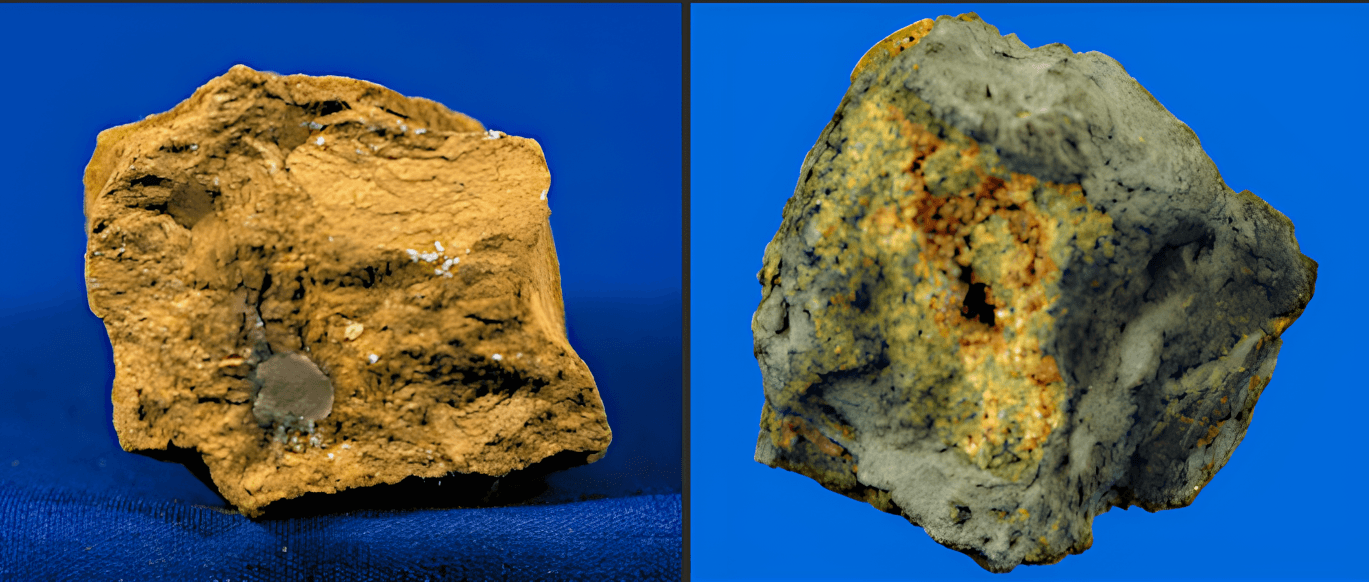
Left: Raw yellow ochre—an iron-rich earth pigment valued for its stability and long use in painting. Right: Orpiment, an arsenic sulfide mineral prized for its brilliant color but hazardous to prepare and handle. Credit: Left: Limonite (iron-rich mineral associated with ochre), U.S. Geological Survey. Right: Orpiment (arsenic sulfide), Utah, USA, Geoscience Digital Image Library (GeoDIL), University of North Dakota. Both images in the public domain.
Orpiment Was Poison. Indian Yellow Was Scandal.
In the 18th and 19th centuries, a luminous, deep golden-yellow pigment appeared in European painting. Its origin closely guarded, the color was unlike anything produced by mineral sources—warm, transparent, almost edible in its richness. This was Indian Yellow.
A product of extraction, the luminous yellow seen in Dutch still lifes and British watercolors was made in rural India, where farmers collected the urine of cows fed exclusively on mango leaves. The bright yellow liquid was filtered, formed into solid balls, and exported. This agricultural labor—the metabolic output of animals, sustained by human hands—echoes the labor that shaped the Delta’s fortunes. Banned in the early 20th century after the practice proved harmful to the cattle, Indian Yellow became one of art history’s “lost” pigments, today a footnote in the larger story of how global trade made European masterpieces possible.
Yellow in the Delta
In the Northeast Louisiana Delta, yellow is the color of the harvest—of corn and grain that sustained communities. It is also the color of joy, of what folk artists call the Spirit: a break from the grayness of toil. When Clementine Hunter painted plantation life, she used yellow for Sunday dresses, church windows, and the glow of a candle in a dark cabin.
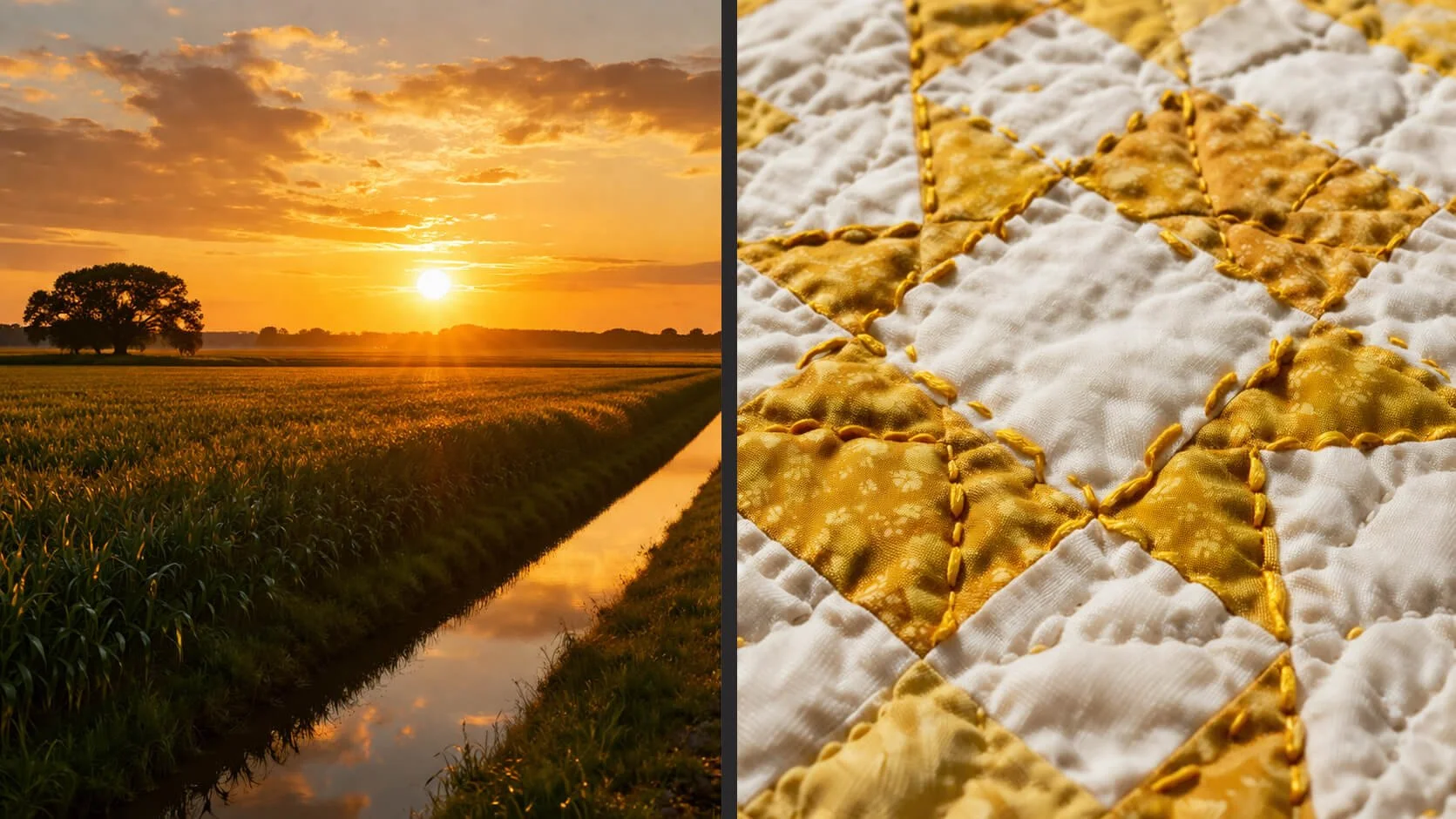
A golden Delta sunset over fields, paired with a detail of yellow thread in a traditional African American quilt. Image generated for the museum.
The Industrial Revolution
Chemists in France developed chrome yellow in the mid-19th century, and it quickly became the most widely used yellow pigment in the world. Cheaper than Indian Yellow and brighter than ochre, it freed artists from dependence on mines or agricultural supply chains. This was the yellow Vincent van Gogh used for his sunflowers—applied in thick, urgent strokes that seemed to vibrate with heat.
In the United States, chrome yellow became the color of utility. Cheap, durable, and highly visible, it was widely used for school buses, road signs, and industrial equipment. By the early 20th century, yellow was no longer the color of divinity or wealth, but the color of caution—of warning, of the everyday.
At the Northeast Louisiana Delta African American Heritage Museum, we encourage visitors to look closer at the yellow on the surface of a painting. Is it the ochre of the earth, stable and permanent? Is it the chrome yellow of industry, a color of utility and caution? Or is it the luminous gold of a Sunday dress painted by an artist who knew exactly what the color meant?
Every field of color is connected to a global network of geology, trade, and labor. The yellow in a quilt made in Monroe did not begin here. It moved—through mines, through fields, through mango groves, through laboratories—long before it arrived in the hands of the artist. That history is part of what we preserve, and it is why we invite you to come see for yourselves.