How a Tiny Insect Colored an Empire?
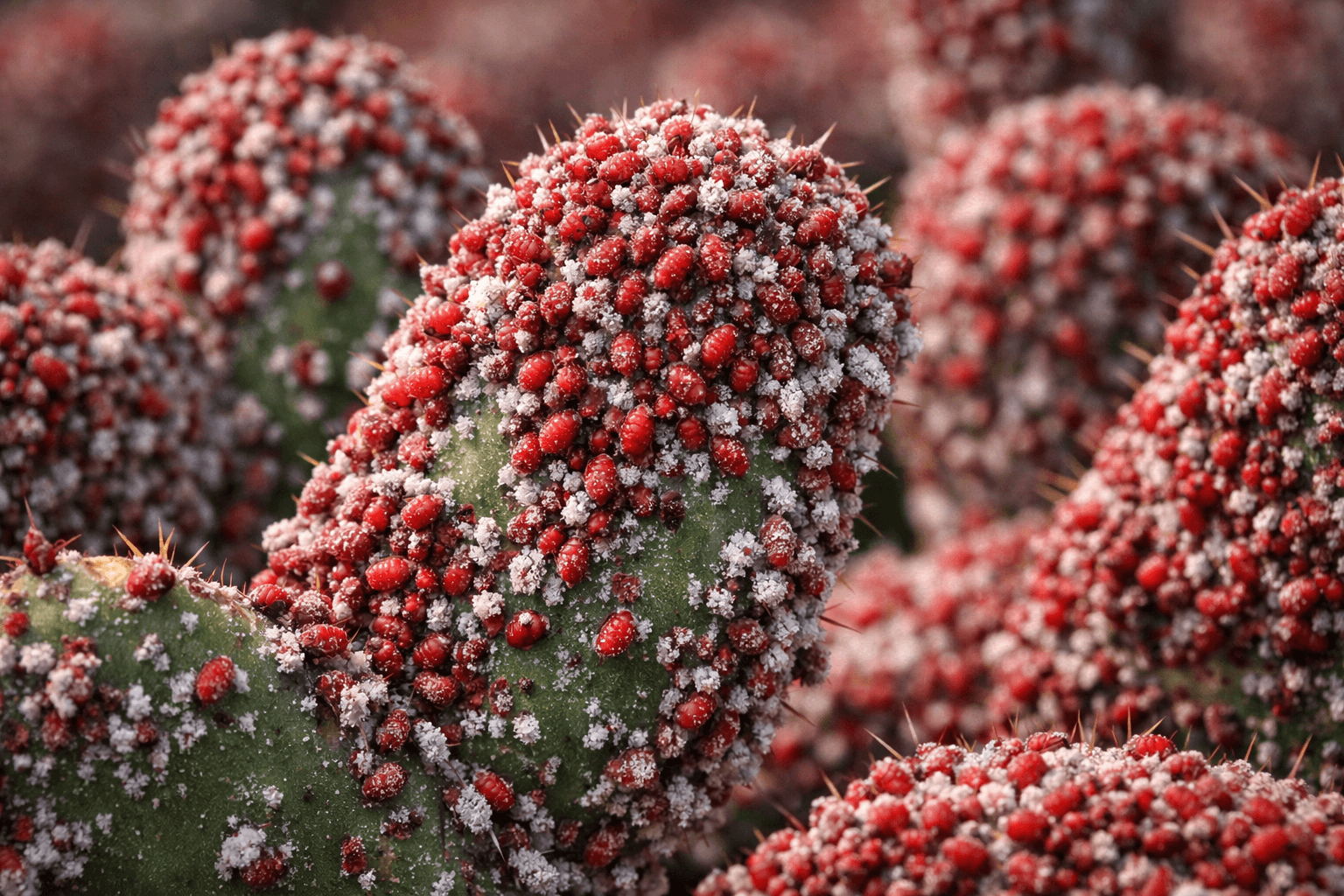
Cochineal insects clustered on prickly pear cactus, the source of carmine dye. AI-generated image for the Northeast Louisiana Delta African American Heritage Museum, 2026.
Throughout history, ultramarine blue, derived from the precious stone lapis lazuli, was the color reserved for the elite and for painting the sacred. The most vivid red available to painters came from a different source entirely: carmine, a pigment derived from the cochineal insect and cultivated across Mexico and Central America through a process Indigenous communities had mastered long before European contact.
Hiding in Plain Sight
The cochineal insect lives on the prickly pear cactus. When harvested, dried, and ground, it releases carminic acid—a compound that, when combined with certain minerals, can be transformed into a stable pigment of unusual brilliance and depth. It was difficult to produce: tens of thousands of insects were required to create a single pound of dye. What emerged was something the Old World had never seen—a red that held its intensity and did not dull.
Empire in a Grain of Red
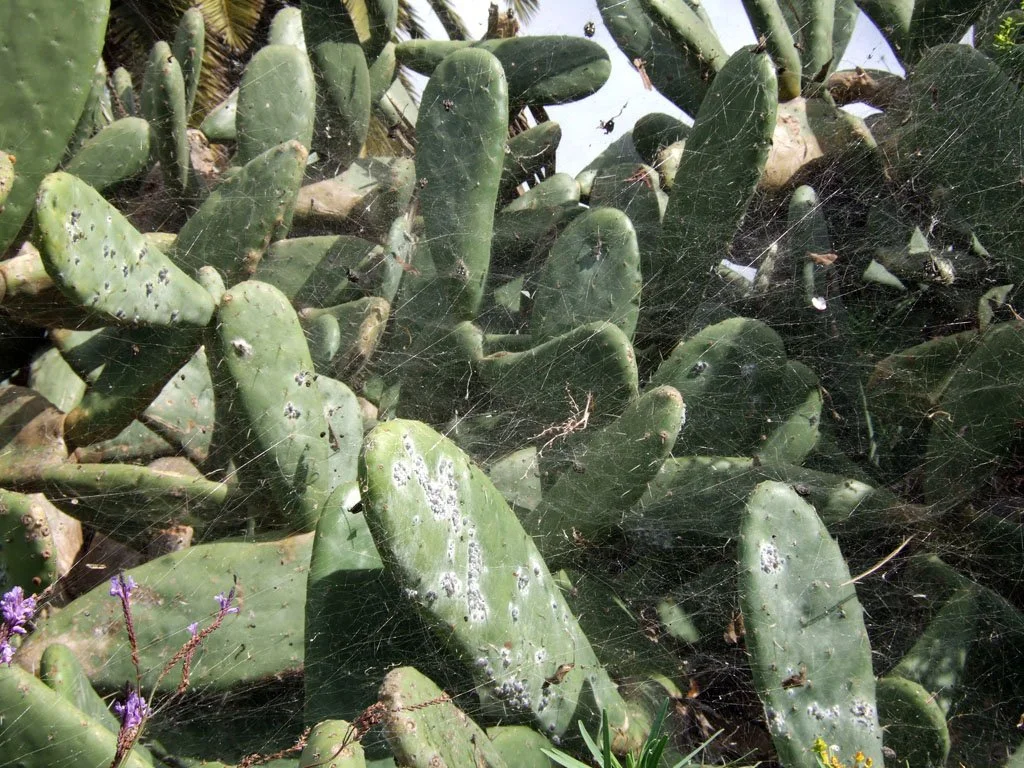
Cochineal insects clustered on prickly pear cactus pads. Credit: Cochineal on Opuntia cactus, La Palma by Zyance, via Wikimedia Commons. Licensed under Creative Commons Attribution-ShareAlike 2.5 (CC BY-SA 2.5): https://creativecommons.org/licenses/by-sa/2.5/
When the Spanish arrived in the Americas, they seized control of cochineal production—absorbing and regulating the Indigenous systems that had sustained it, and bringing those who held that knowledge under colonial rule. For nearly 250 years, the source of the pigment was closely guarded, even as shipments of cochineal moved across the Atlantic, becoming one of the most valuable exports of the colonial world—second only to silver.
The Color of Power
Cochineal dyed the uniforms of empires. It appeared in the robes of royalty. It entered the studios of painters like Rembrandt and Velázquez, where it became part of the visual language of wealth, status, and control. The same trade routes that carried cochineal to Europe also carried slaves—across the Atlantic, binding the Americas, Africa, and Europe in a single extractive economy.
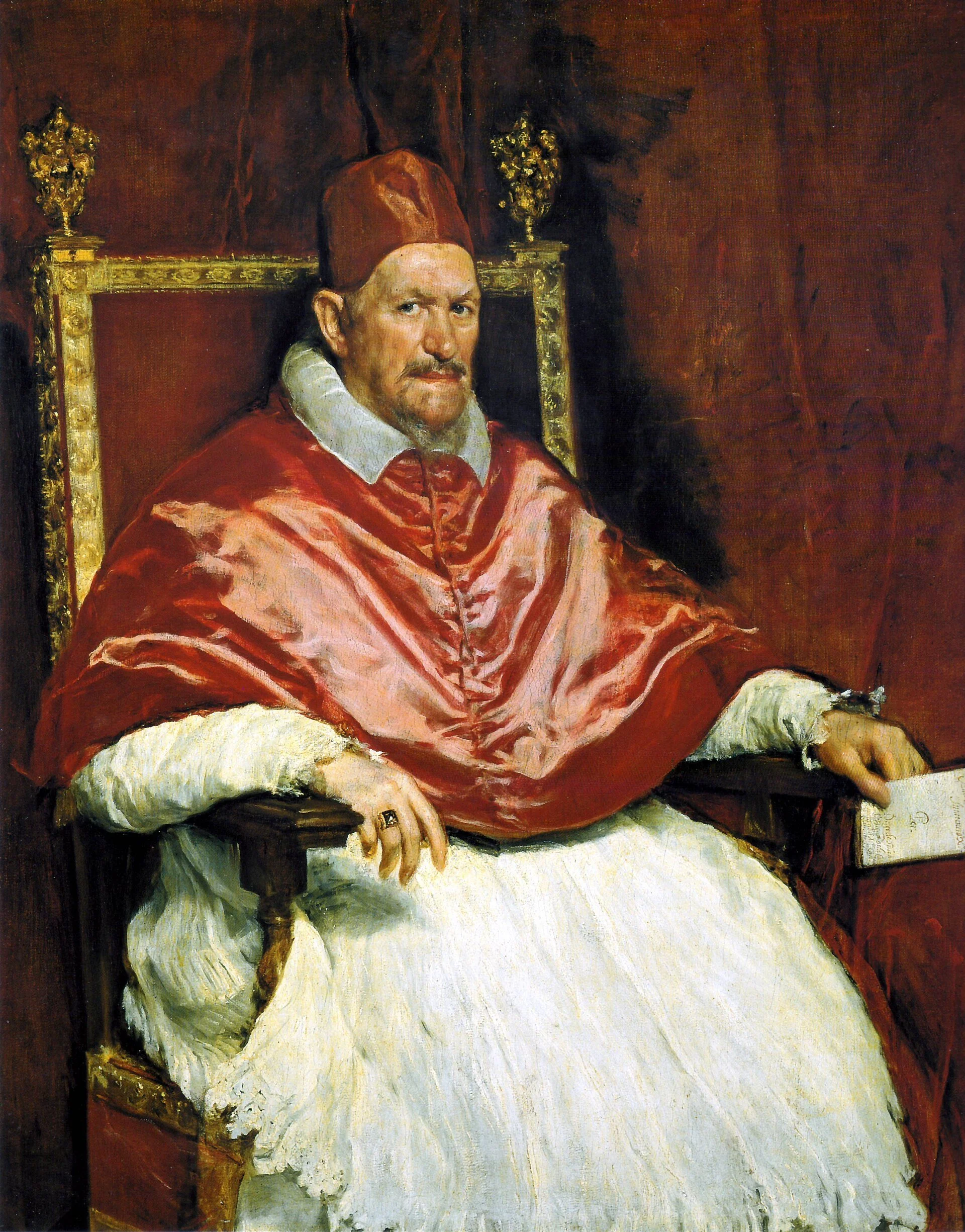
Portrait of Innocent X (c. 1650) by Diego Velázquez. Public domain. Courtesy of Galleria Doria Pamphilj.
Labor, Color, and the Delta
While the Delta is often defined by the white of cotton or the blue of indigo, it was shaped by the same global systems that moved cochineal across oceans. These materials traveled through ports like New Orleans and up the Mississippi River, linking distant sites of cultivation to centers of wealth and exchange. What was produced in one place, under one set of conditions, was consumed in another. The wealth generated by color—whether blue or red—often depended on Black and Brown labor that was controlled, extracted, and rarely credited.
The Fragility of Color
Technically, carmine is a “lake pigment”—that is, a dye fixed onto a mineral base. It is organic. And because of that, it can fade over time, causing that brilliant red to soften and, in some cases, disappear entirely. Like the labor that produced it, the color itself could be rendered invisible—though traces of both remain for those who know how to look. Within African American cultural traditions, red carries both the mark of labor and a sense of protection and presence throughout the South.
Why Carmine Still Matters
Here at the Northeast Louisiana Delta African American Heritage Museum, we recognize materials like carmine not only for their beauty, but for what they reveal. When we encounter a deep red in a contemporary work, we see a path that runs from a cactus in Mexico, through systems of trade and empire, into the hands of local artists who continue to shape its meaning on their own terms.
And so the color remains—as does the power to define its meaning.
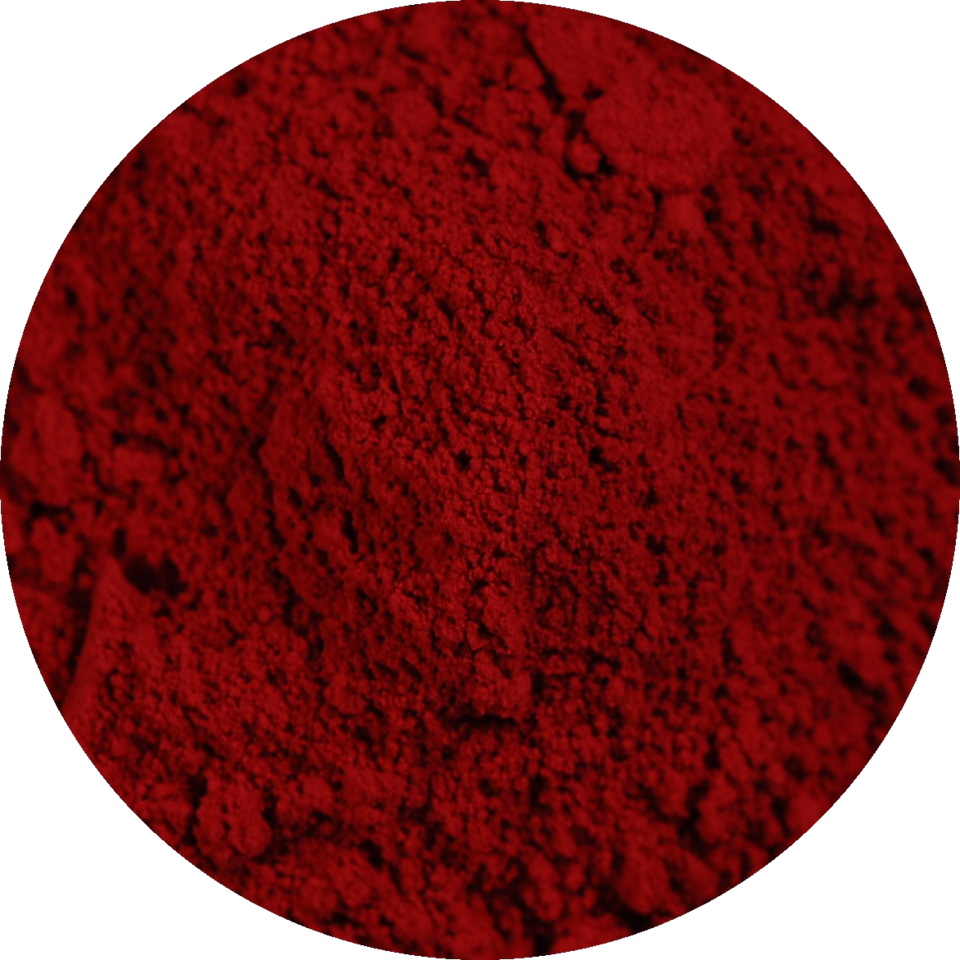
Carmine dye by Stephhzz, via Wikimedia Commons, licensed under CC BY-SA 3.0.
“Did You Know? Carmine is still in use today, appearing as a natural coloring in foods, cosmetics, and textiles—often listed as “cochineal extract” or “E120.”
See color in context. Visit the Northeast Louisiana Delta African American Heritage Museum to explore our collection and trace the materials, labor, and traditions that continue to shape the art we see today. -