Mapping the World of Art: Part VIII — The Great Unraveling
← Part VII — The Architecture of Self-Definition
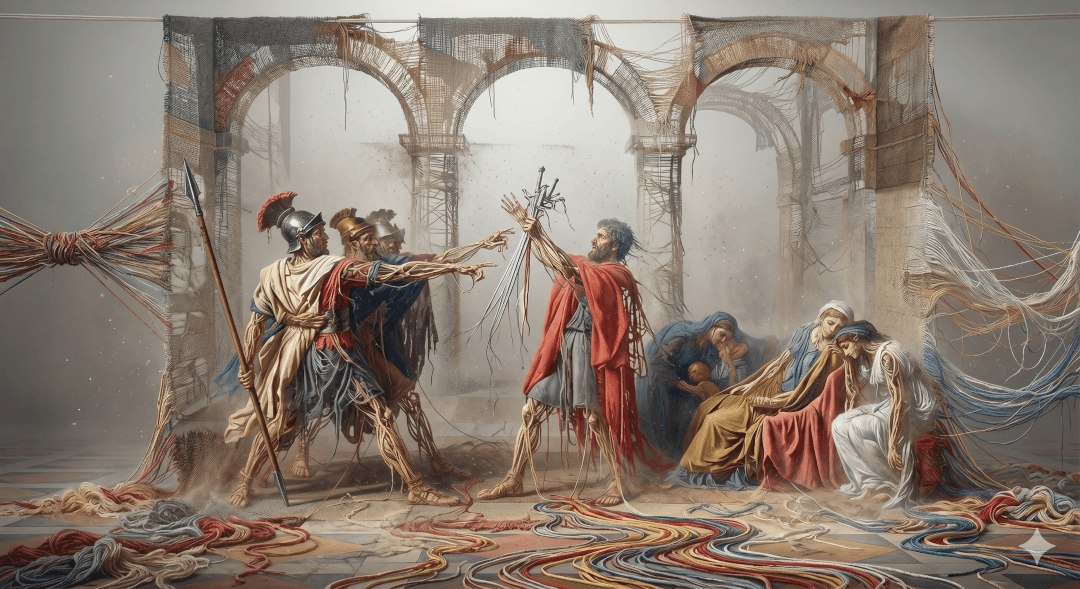
The Oath Unravels. Inspired by Jacques-Louis David's The Oath of the Horatii (1784), this contemporary reinterpretation visualizes the gradual unraveling of the classical rules that governed Western art for centuries. Photo Credit: Adapted from Jacques-Louis David, The Oath of the Horatii (1784). Original work in the public domain.
Throughout this series, we have watched powerful institutions use visual rules to control reality. Egyptian artists used the grid to enforce cosmic order. Greek artists used the canon to trap beauty inside an impossible mathematical ideal. Renaissance artists used linear perspective to construct an imperial window where the entire world submitted to a single viewer's eye. For nearly five hundred years, that Western window was the law. If your art didn't follow those precise rules, the academies labeled you "primitive" or "uncivilized."
But during the nineteenth century, the dam began to leak. Western artists themselves began turning on their own rules—not because they wanted to free the world, but because the old formulas could no longer hold the weight of modern reality.
Before we can understand how the breakthroughs of Harlem or the radicalism of the Black Arts Movement became possible, we have to look at the map of The Great Unraveling—the moment when one generation after another pushed against inherited rules, often without realizing how much of the old structure they were bringing down.
Hammer #1: Neoclassicism vs. Romanticism (The Battle Over Authority)
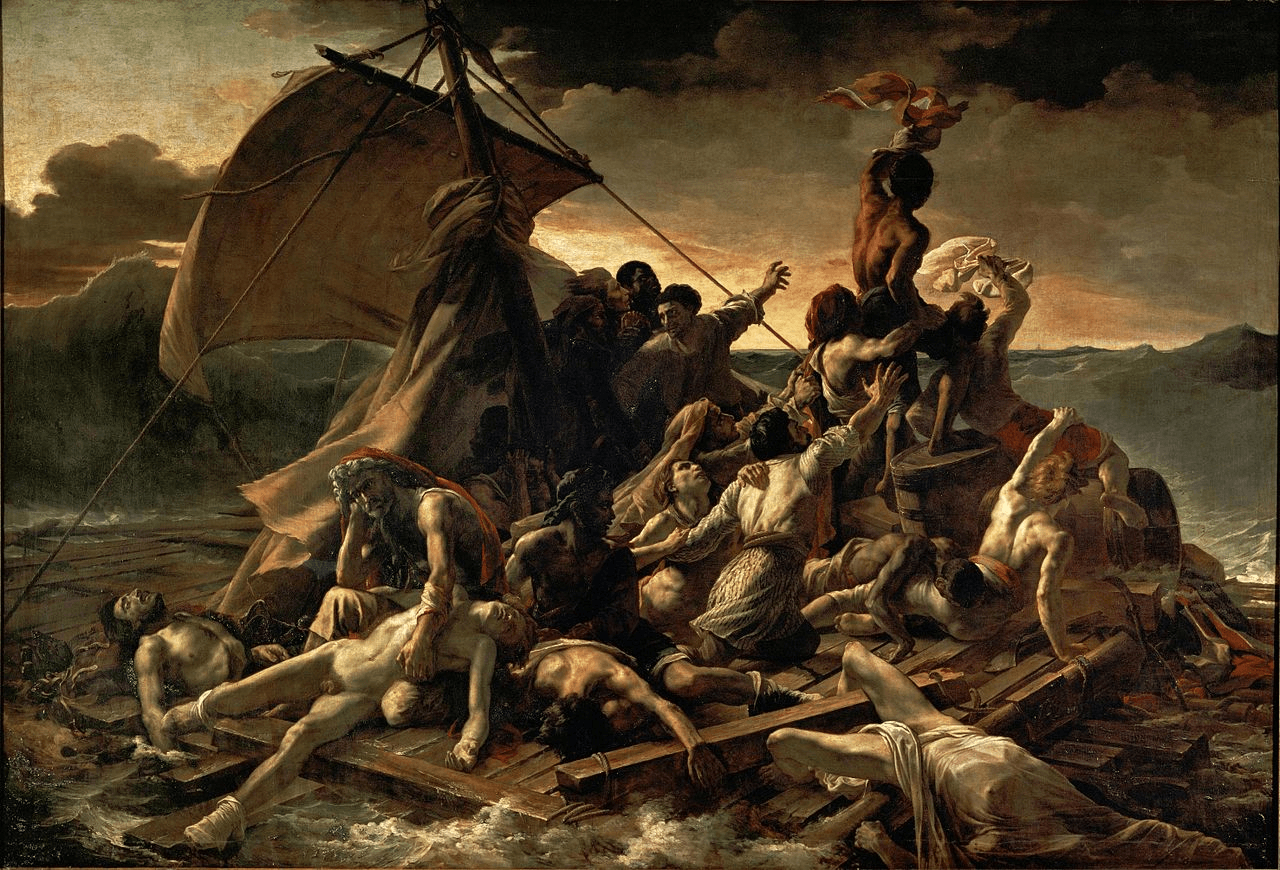
The Romantic Revolt. In The Raft of the Medusa, Théodore Géricault replaced the order and certainty of Neoclassicism with catastrophe, emotion, and human vulnerability. Romantic artists argued that reality could not be contained within a classical grid. Image Credit: Théodore Géricault, The Raft of the Medusa (1818–1819). Public domain.
By the late 1700s, the first major crack appeared as a civil war over what art was even for. On one side stood Neoclassicism (New Classicism). Neoclassical artists looked backward to Ancient Greece and Rome, using crisp lines, smooth surfaces, and heroic subjects to preach order, duty, and logic. It was the ultimate "law and order" art, designed to make empires look rational.
But the human spirit refused to stay inside that box. A generation of rebels called the Romantics hit back. Romanticism rejected cold reason and threw the map into the fires of raw emotion, imagination, and terror. Instead of clean Roman soldiers, they painted shipwrecked sailors, roaring storms, and the sublime, untamable power of nature.
The Map Shift: Neoclassicism tried to reinforce the walls; Romanticism proved that the inner world of human emotion was too chaotic for a classical grid to contain.
Hammer #2: Realism vs. Impressionism (The Dissolution of the Solid World)
By the mid-1800s, the technology of Photography was invented and suddenly, a machine could record the visible world instantly. Painting was forced to either adapt or die. A movement called Realism struck the next blow. Realists rejected the grand historical myths of the academies. They insisted that ordinary people, poverty, and everyday labor were the only subjects worth painting. They brought the canvas down into the dirt.
Then came Impressionism.
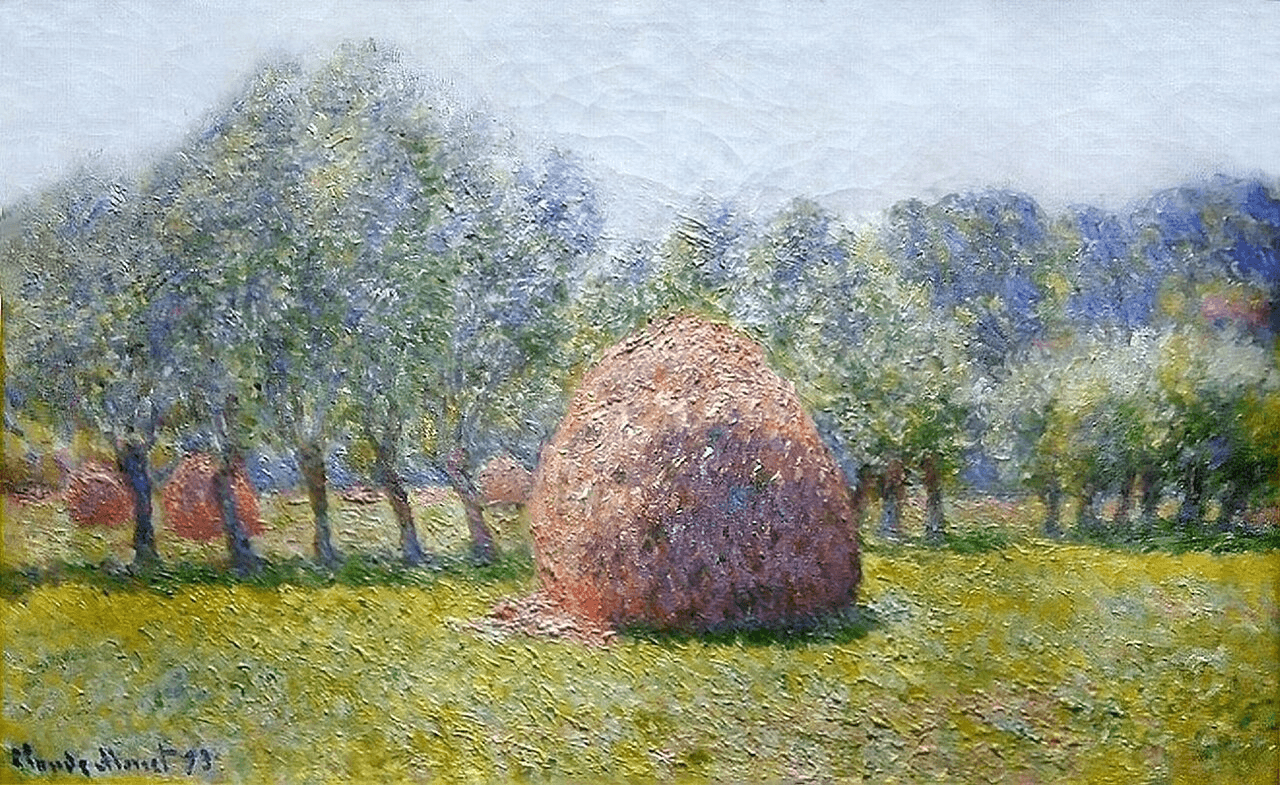
The Dissolution of the Solid World. In Monet's Haystack (1893), the subject matters less than the changing effects of light and atmosphere. Impressionist painters shifted attention away from permanent objects and toward the fleeting experience of seeing itself. Image Credit: Claude Monet, Haystack (1893). Public domain. Image via Wikimedia Commons.
When Claude Monet painted a cathedral or a haystack, he didn't care primarily about the stone or the straw. He cared about the light bouncing off them in a single, fleeting second. To capture that instant, Impressionists abandoned the "technical finish" of the academies favoring instead, loose, blurry, unfinished brushstrokes.
Under the Impressionist brush, the solid, measurable world of the Renaissance dissolved into pure atmosphere. They proved that reality isn't a permanent asset you can own; it is a temporary experience that changes second by second. For countless museum visitors today, this is still one of the most important turning points on the map. Art stopped asking, "What is this object?" and began asking, "What does it feel like to see it?"
Hammer #3: Post-Impressionism (The Fracture of the Lens)
If Impressionism dissolved light, Post-Impressionism fractured form entirely. Artists like Vincent van Gogh and Paul Cézanne took the freedom of loose paint and pushed it to its absolute limit. Van Gogh turned color into a psychological weapon, painting skies that swirled with madness and grief. Cézanne began tilting tables and distorting objects, painting what it feels like to look at a scene over time rather than in a frozen split-second.
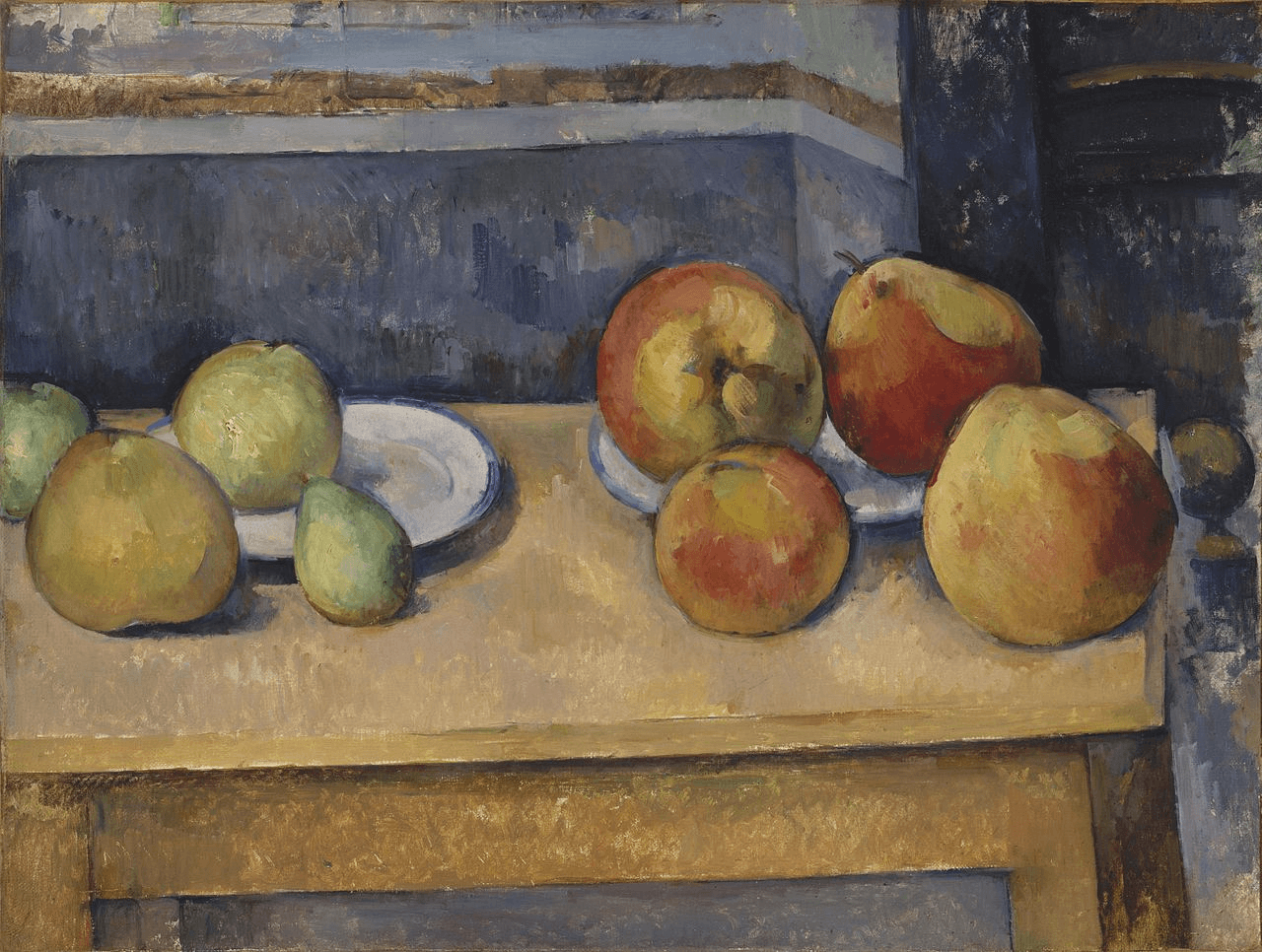
The Fracture of the Lens. In works like Still Life with Apples and Pears, Paul Cézanne began loosening the rules of Renaissance perspective. Tables tilt, space shifts, and objects seem observed from multiple moments at once—opening a path that would eventually lead to Cubism. Image Credit: Paul Cézanne, Still Life with Apples and Pears (c. 1891–1892). Public domain.
This is the exact threshold we crossed in Part VI. When Cubism finally shattered the window by flattening space and incorporating African aesthetic technologies, it delivered the final coup de grâce to a structure that had been weakening for more than a century.
Why This Matters in the Delta
You cannot launch a revolution in a world where the rules are considered divine law. The Western "Great Unraveling" matters because the collapse of artistic rules cleared the ground for social ones to be questioned. When Europe spent the nineteenth century demonstrating that its own classical rules were choices rather than universal truths, it unintentionally weakened the idea that any hierarchy should be accepted simply because it had always existed.
The same historic momentum that witnessed the dismantling of the academic frame also witnessed the rise of labor movements, the Great Migration, and the early rumblings of the Civil Rights struggle.
When Black artists arrived in Harlem in the 1920s, the old artistic rules no longer seemed untouchable. European modernists had already demonstrated that inherited systems could be challenged. Harlem artists would use that opening for their own purposes. The landscape was no longer a single, guarded highway; it was an open territory.
Where Are You?
You are standing at the absolute end of the Single-Narrative Map. The road has ended. The taxonomy of Western "-isms" has successfully eaten itself alive. By tearing down their own standards of perfection, line, perspective, and representation, the old world created the very freedom that would allow new centers of gravity to rise.
You are now equipped to see exactly where all these terms fit. They aren't isolated vocabulary words; they are the cracks in the dam. And now that the dam is completely gone, we can finally see what happens when a people build an entirely new structure on their own terms.
In Part IX, we return to the rising center of the Harlem Renaissance, where self-definition takes the wheel of this newfound freedom.
Continue the Journey
You are currently standing at the point where the old artistic order begins to collapse. If this is your first stop, begin with Part I — The Map to explore how humanity moved from prehistoric marks on stone to the revolutions that reshaped the modern world.