Who Is Sarah Breedlove?
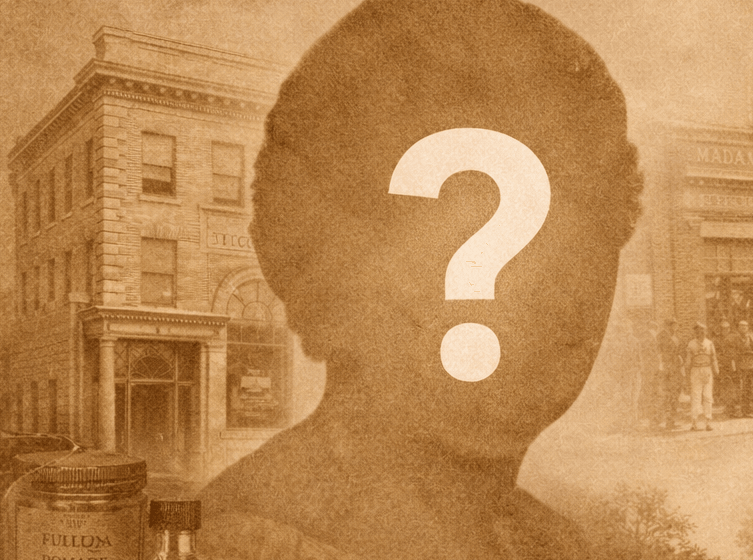
The question sounds innocent enough. Who is Sarah Breedlove? As if the answer might step forward, raise its hand, and offer a clean paragraph in response. But Sarah Breedlove doesn’t announce herself that way. She accumulates. She makes you work a little before she lets you see her clearly.
As the first in a series of essays leading to Black History Month, this question is our starting point—not for a simple biography, but for an exploration of legacy. So, who was she?
She was born in Louisiana in 1867, just after the Civil War, on soil that still remembered bondage, to parents who had been enslaved. That timing matters. Freedom, in theory, had arrived. In practice, it hovered like a rumor—circulated but unevenly distributed. Sarah inherited that contradiction. She did not grow up with chains on her wrists, but the ground beneath her feet was still shaped by them.
By the age of seven, she was an orphan. Childhood closed early. Survival stepped in and never really left. She worked cotton fields, then wash tubs, earning a living the way many Black women did—through labor so constant it barely left a record. Laundry does that. It cleans other people’s lives while quietly erasing your own from the page.
If her early years taught her anything, it was this: nothing arrives pre-assembled.
Hair loss came later, slipping into her life without ceremony. It was common among Black women at the turn of the twentieth century, though rarely discussed openly. Poor nutrition, harsh conditions, limited access to clean water, and products never designed for textured hair all played their part. This wasn’t vanity; it was health, dignity, and visibility tangled together.
Sarah noticed the pattern. She paid attention. And attention, when sustained, has a way of turning into insight.
She began experimenting—first privately, then more deliberately. After working as a sales agent for existing Black-owned hair-care companies, she developed her own formula and something more important alongside it: a vision. When she renamed herself Madam C. J. Walker, it wasn’t a costume change. It was authorship. She was writing herself into a world that had not planned to footnote her.
What followed was not a stroke of luck but a system. Walker built factories and schools, distribution networks and training programs. She taught thousands of Black women not only how to care for hair, but how to build income, keep books, speak with authority, and move through public space with intention. Her sales agents became entrepreneurs in their own right—each one a small correction to a national narrative that insisted Black women belonged only at the margins.
By the early twentieth century, her business stretched across the country. Her success eventually made her one of the first self-made female millionaires in the United States, a title that often gets repeated without acknowledging the resistance it had to push through to exist at all.
Money did not soften her focus. It sharpened it.
Walker gave generously to Black schools, churches, and organizations. She supported civil rights causes, anti-lynching efforts, and educational initiatives. Her home, Villa Lewaro, was less a monument than a meeting place—a space where Black leaders, artists, and thinkers gathered to imagine futures that extended beyond mere survival.
So who is Sarah Breedlove?
She is not just Madam C. J. Walker, though history prefers that name because it fits neatly into the success column. She is a woman who understood that invention often begins where necessity and imagination collide. She is evidence that Black entrepreneurship has always been as much about community as capital. She is a reminder that progress is rarely loud at first—it usually starts quietly, with someone refusing to accept the conditions handed to them.
Her life does not resolve into a slogan. It keeps unfolding, long after her name is spoken. And perhaps that is the most honest answer of all: Sarah Breedlove is not simply someone to know about. She is someone history is still catching up to.
For more information, contact us.
Series Footer
This post is part of a three-part essay series exploring Black leadership, power, and institution-building across time:
Who Is Sarah Breedlove?