Who Is Going to Build Our Future?
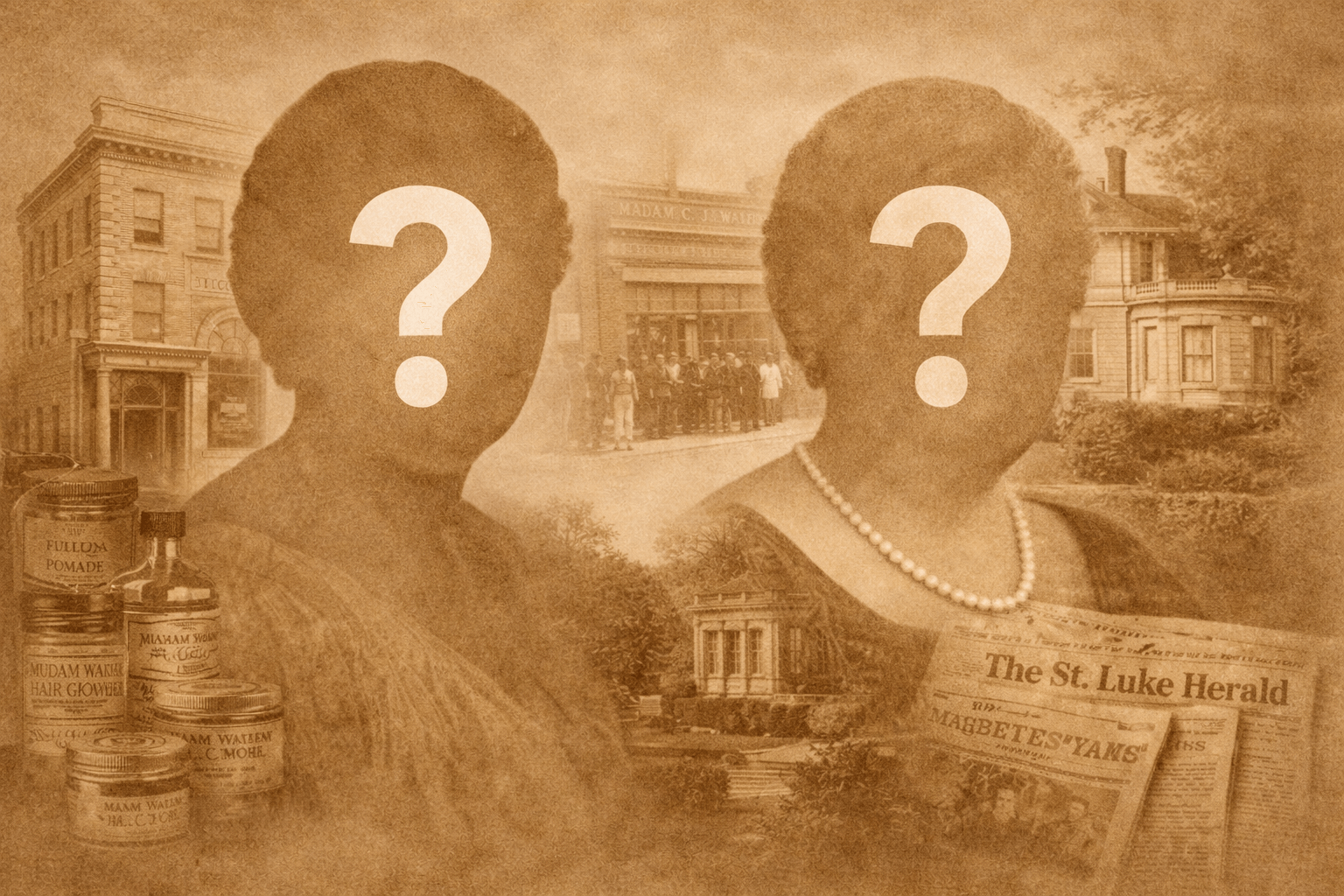
The question follows naturally from the ones we’ve already asked: Who is Sarah Breedlove? Who is Maggie Lena Walker?
Those questions look backward—not out of nostalgia, but out of necessity. Studying how power was built before forces us to see what is structurally absent now. And as Black History Month begins, that absence feels sharper, harder to ignore.
So the question that remains is not historical at all.
Who is going to build our future?
Visibility Without Legacy
We are not short on visibility; we are drowning in it. What we lack is legacy—not legacy as reputation, but legacy as deliberate, durable creation. The kind built by people committed to something beyond themselves.
Our cultural landscape is crowded with figures who command attention, money, platforms, and applause: musicians, influencers, celebrities, entrepreneurs. People celebrated as leaders primarily for their success within—not against—systems that continue to thrive on inequality.
What we are short on is something else entirely.
We are short on people willing to build beyond themselves.
Sarah Breedlove did not merely become wealthy; she created pathways for thousands of Black women to earn, organize, and imagine new possibilities for their lives. Maggie Lena Walker did not simply manage money; she built institutions designed to stabilize Black life across generations. Their work was not about proximity to power. It was about restructuring access to it.
Today, much of what passes for leadership asks far less.
The Comfort of Individual Excellence
We are told—again and again—that the solution lies in individual excellence. Work hard enough. Know the right things. Make the right moves. Accumulate enough wealth to insulate yourself and your family from harm.
This story is familiar because it is comforting. It suggests that the system is fundamentally fair, merely difficult—and that success is proof of moral clarity.
But history tells a different story.
The systems Breedlove and Walker confronted were not neutral arenas. They were engineered to produce exclusion. Their brilliance lay not in mastering those systems, but in building alternatives alongside and against them. They understood that personal success, without collective infrastructure, is fragile—and that survival without structure does not scale.
As Black History Month opens, this distinction matters.
Art, Interpretation, and the Work of Museums
History is not only something we commemorate; it is something we interpret. And art—painting, architecture, design, visual culture—has always been one of the ways Black communities have made sense of conditions that words alone could not hold.
This is where interpretation becomes active, not passive. Art, in our tradition, has never been mere decoration; it becomes a conduit: a way of asking questions publicly, of imagining futures privately, of giving form to ideas that have not yet found institutions strong enough to support them.
This is why museums matter now, not later.
At moments when political language grows more hostile, when systems reveal how easily people can be discarded, art offers a different kind of clarity. It does not pretend to solve everything. But it slows us down long enough to see what is being built—and what is not.
Builders, Not Brand Ambassadors
We are living in a moment of escalating risk—political, economic, and moral. Democratic norms feel brittle. The margins widen. The sense that entire populations can be displaced, erased, or rendered expendable is no longer theoretical.
In moments like this, history does not ask for entertainers or brand ambassadors. It asks for builders.
That does not mean the next Sarah Breedlove or Maggie Lena Walker will look familiar. They may not lead marches. They may not trend online. They may not be wealthy, famous, or widely celebrated.
They may be assembling something slowly—quietly—out of view.
An institution.
A network.
A structure capable of holding when pressure comes.
Or they may not yet exist at all.
That is the uncomfortable possibility we have to sit with.
The Open Question
The future is not guaranteed by legacy alone. It is shaped by people willing to assume responsibility for what comes after them—people prepared to sacrifice recognition for durability, and personal gain for collective survival.
So, who is going to build our future?
As Black History Month begins, the most honest answer may be this: we don’t know yet. History gives us instructions. Art teaches us how to listen. Institutions—when built with intention—give those ideas somewhere to live.
Whether anyone is willing to take up that work remains the open question.
A Note on Support
If this question matters to you—if you believe, as we do, that history demands builders as much as it does storytellers—then your support is an act of institution-building itself. Membership or donation to the Northeast Louisiana Delta African American Heritage Museum helps sustain the work of preserving, interpreting, and making visible the stories, ideas, and institutions that shape our collective future.
Series Footer
This post concludes a three-part essay series exploring Black leadership, power, and institution-building across time:
Who Is Going to Build Our Future?