Painting vs Photography
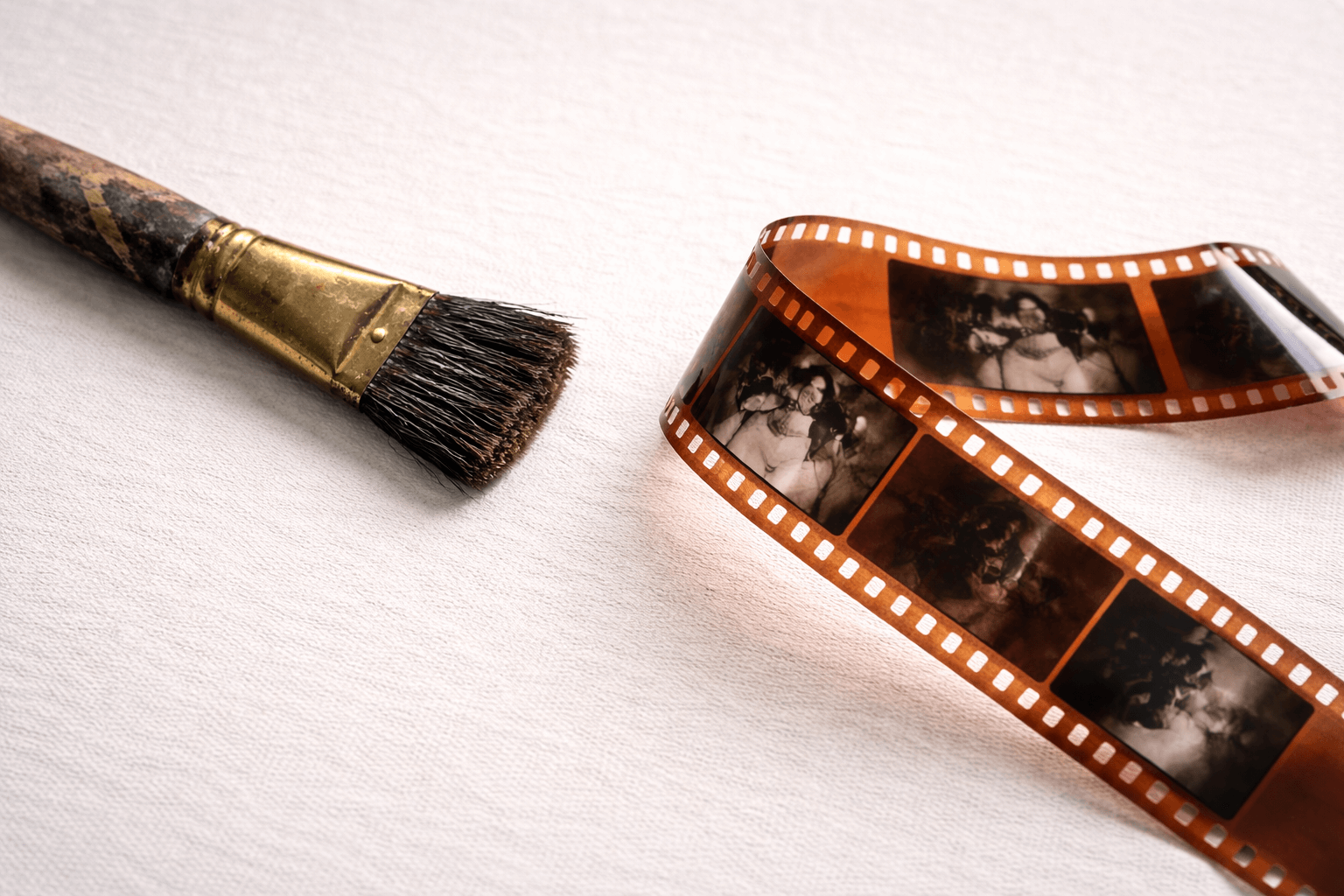
Two Disciplines, One Responsibility
Museums are not neutral spaces. They organize knowledge, signal value, and quietly instruct viewers on what kinds of labor count as art. One of the most persistent hierarchies visitors encounter—often without realizing it—is the implied distinction between painting and photography: the painting as “fine art,” the photograph as “record.”
At the Northeast Louisiana Delta African American Heritage Museum, we reject that distinction. Not because the two mediums are the same—they are not—but because both require forms of physical mastery that are central to how Black history has been preserved, interpreted, and understood.
To see why major museums have long separated these disciplines into different departments, wings, or even institutions, we need to look closely at the material demands of each craft.
Photography as constructed image
Before the digital era compressed photography into a near-instantaneous act, the medium was physically exacting and technically unforgiving. Traditional photography required fluency in optics, chemistry, timing, and environmental control. The camera was only the beginning.
In the darkroom, images were shaped deliberately. Techniques such as dodging and burning—manually controlling exposure during printing—required dexterity, precision, and judgment developed through repetition. Prints could be ruined by seconds of overexposure or slight chemical imbalance. Every successful photograph represented a chain of decisions, not a single moment.
Gordon Parks exemplifies this mastery. Although often discussed for his subject matter—poverty, segregation, dignity under pressure—Parks was also a rigorous technician. His images do not merely document Black life; they are built objects. Works such as American Gothic, Washington, D.C. (1942) are carefully calibrated compositions in which light, framing, and tonal contrast function with the same intentionality as a painter’s palette.
Painting as accumulated time
If photography compresses decision-making into moments of exposure and development, painting extends it across time. The discipline demands sustained physical engagement: preparing surfaces, understanding pigment behavior, controlling edges, and building form through layering.
Charles White, a contemporary of Gordon Parks, demonstrates this rigor with exceptional clarity. Working primarily in drawing and painting, White devoted years to mastering draftsmanship as a means of ethical representation. His figures are monumental not because of scale alone, but because of the labor embedded in their construction. Each contour is negotiated; each value earns its place.
White’s work counters the idea that painting is expressive improvisation. It is instead a slow architecture of form. In a historical context where Black subjects were routinely caricatured, such precision functioned as resistance. Permanence, here, was political—not symbolic, but structural.
Painting allowed artists like White to insist on duration: images that could be returned to, studied, and preserved beyond the moment.
Why museums historically separate these media
The division between photography and painting in museums is often attributed to conservation, and that explanation is partly correct. Photographic materials—especially gelatin silver prints—are highly sensitive to light, humidity, and temperature. Paintings present different risks: structural tension, varnish degradation, pigment instability.
But conservation is not the whole story.
Photography entered museums later than painting and often through archives rather than galleries. Its early institutional home was documentary, scientific, or journalistic. Painting, by contrast, was absorbed into museums as a legacy art tied to patronage, connoisseurship, and academic training. These histories still influence how collections are organized today.
Understanding this context matters, because it reveals that separation does not imply hierarchy—though it has often been interpreted as one.
A regional perspective on collection and care
For a regional museum, this distinction is not academic. It is practical.
The history of the Delta exists across multiple forms: photographs that testify to labor and community; paintings and drawings that interpret interior life, aspiration, and memory. No single medium can carry the full weight of that history.
A photograph may offer proof—evidence that a life was lived, a place existed, a moment mattered. A painting may offer continuity—space to reflect, to imagine, to insist on presence beyond documentation. Together, they form a record that is both factual and felt.
Looking closely
Museums ask visitors to slow down—to look not only at what is depicted, but at how it was made. The darkroom labor behind a photograph or the accumulated hours within a drawing reveal artists in both disciplines as builders of visual knowledge.
In honoring both painting and photography, we recognize the full range of skill required to preserve Black life within the historical record.
Which medium speaks most clearly to you—and why? Share your thoughts with us.
For more writing like this, visit our Explore History & Art page.