10 Things You Might Not Know About Black Museums
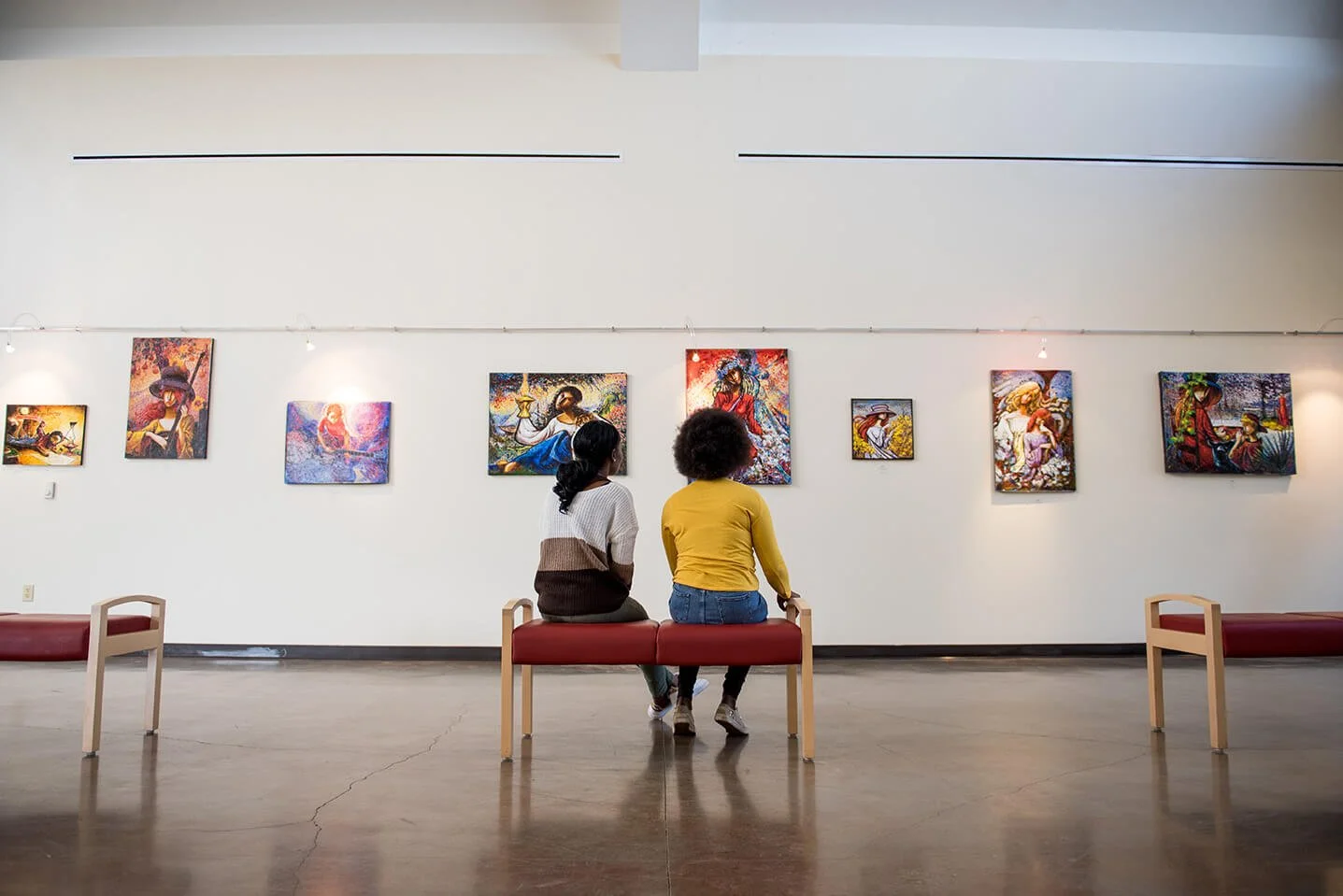
Young people enjoy art displays at the Northeast Louisiana Delta African-American Heritage Museum.
When you walk through a Black museum, you’re seeing more than art on walls. You’re witnessing an active project of historical reclamation—one that preserves culture, challenges omission, and, at times, builds the very frameworks art history failed to provide.
Museums dedicated to Black artists do not function like their encyclopedic counterparts. Their missions shape every decision, from what enters the collection to how stories are told. Here are ten things you might not know about how these museums actually operate—and why they matter.
1. Their collections are often legally restricted by design
Many Black-focused museums operate under founding charters that strictly limit acquisitions to artists of African descent. These are not symbolic guidelines; they are legal guardrails. Curators may be unable to accept works by non-Black artists even for contextual purposes, ensuring the mission remains intact while narrowing curatorial flexibility in ways most visitors never see.
2. They built collections without the art market’s permission
Because Black artists were historically undervalued or excluded from mainstream galleries, many foundational works entered museums directly from artists’ families and estates. Institutions like the Studio Museum in Harlem collected major artists long before auction houses or blue-chip galleries took notice.
3. Their storage rooms contain unwritten art history
Behind the scenes are works with no catalogues raisonnés, no monographs, and no formal scholarship attached. Entire movements remain unnamed—not because they lack importance, but because no one has yet done the work of defining them. Preservation, in these cases, precedes interpretation.
Here in the Delta, this reality is visible in regional folk traditions and vernacular forms—works preserved for generations within families before institutions ever recognized them as art.
4. They function as incubators, not just archives
Some museums intentionally collect early-career work, betting on significance rather than popularity. This long-term view allows curators to shape future canons quietly, often decades before the market catches up.
5. Conservation is unusually complex
Many Black artists worked with nontraditional materials—house paint, cardboard, fabric, found objects—often by necessity. These museums have had to pioneer conservation techniques that didn’t exist when the works were made, treating preservation as both science and interpretation.
In the Delta, this includes textiles, handmade objects, and materials whose cultural meaning is inseparable from their physical fragility.
6. Market value doesn’t dictate what gets shown
Museums such as the California African American Museum routinely exhibit works with little or no auction presence. Importance is measured culturally and historically, not financially. These institutions help decide what should matter, not just what already sells.
7. They collapse the hierarchy between “fine art” and culture
Photography, textiles, performance documentation, protest signage, posters, and ephemera often sit alongside painting and sculpture. This reflects a curatorial truth: Black artistic production has never fit neatly into Western art categories—and shouldn’t be forced to now.
8. Their audiences are deeply multigenerational
Unlike many contemporary art spaces, Black art museums consistently draw families across age groups. This shapes everything from wall text to exhibition design. Education isn’t supplemental—it’s embedded directly into curatorial decisions.
9. Some rely on universities to protect curatorial freedom
Museums such as the Hampton University Museum and the Spelman College Museum of Fine Art use academic affiliation as insulation. This structure prioritizes scholarship and preservation over spectacle and donor-driven trends.
10. They reveal a parallel American art canon
When Black artists are collected exclusively, patterns emerge that are often invisible in mixed collections—shared formal strategies, philosophical through-lines, and collective responses to exclusion. These museums don’t add footnotes to American art history; they reveal a fully formed parallel narrative that has always existed.

The Northeast Louisiana Delta African-American Heritage Museum, Monroe, Louisiana.
At the Northeast Louisiana Delta African-American Heritage Museum, these principles guide our daily work. We are not simply preserving objects; we are stewarding the ongoing story of the Delta’s African American creativity—ensuring it is preserved, studied, and celebrated on its own terms.
This history is not static. It is living, evolving, and deeply rooted in the community around us. We invite you to visit us and experience it for yourself.
For more reading like this, explore our History & Art section.