Is a Color Just Color? Or Something Else Entirely?
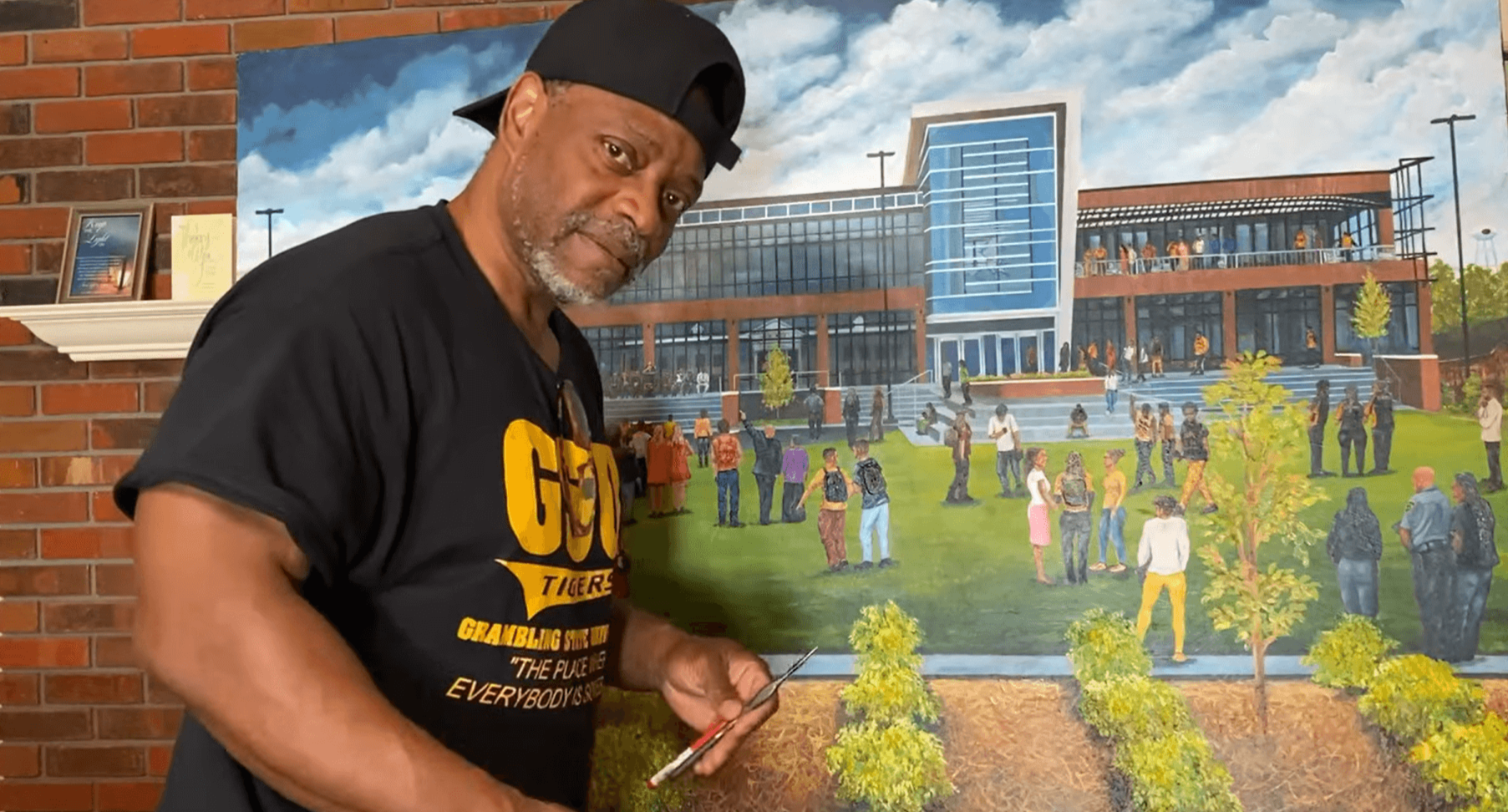
Daryl Triplett. Color as rhythm and atmosphere.
When you step into a gallery at the Northeast Louisiana Delta African-American Heritage Museum and stand in front of a Daryl Triplett painting, something happens.
The colors don’t sit politely on the wall. They celebrate. It’s almost as if they’re the ones excited to see you.
Triplett’s work is dense and layered. His reds push forward like heat rising off pavement in August. Gold flashes like brass catching sunlight in a second-line parade. Deep navy blues are like the bass beneath a B.B. King classic.
You feel these before you analyze them. And it makes you wonder:
Is this just paint? Are these just colors? Or is something else happening entirely?
When Color Changes the Air
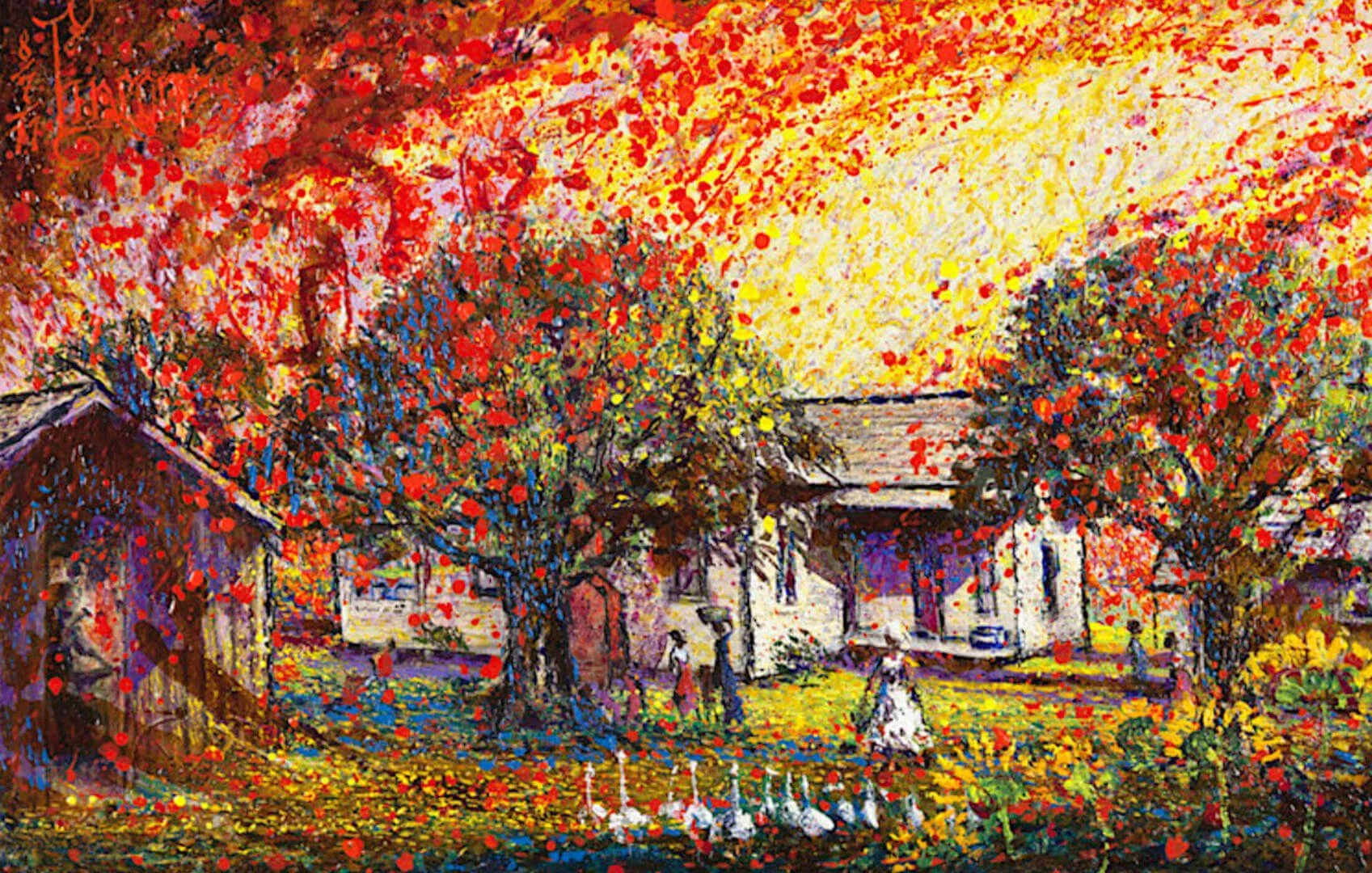
Don Cincone. Movement through color.
A few steps across the gallery, a work by Don Cincone shifts the experience again.
You’re looking at it and the surface moves. Colors swirl and fold into themselves. Hues don’t merely describe a scene — they create rhythm. Your eye doesn’t rest; it travels. You’re not just looking at color. You’re inside it.
Anyone who has walked into a room and felt energized by bright walls — or calmed by cool light — understands this instinctively. Color alters atmosphere. It changes the character of space. It changes how you feel standing in it.
Artists like Triplett and Cincone understand this. They don’t use color to decorate. They use it to affect the air you breathe.
Color Is Material
Color is not an idea. It is matter.
Pigment has thickness. Oil paint carries weight. Dye sinks into fabric and stays there. Gold leaf catches and throws back light.
When Triplett layers color, it is built from substance. When Cincone presses peaks and valleys into a surface, the intensity comes from physical pigment arranged by hand.
Paint occupies space and ages. It cracks. It absorbs humidity. Here in Louisiana, that matters. Heat and air change how color lives on canvas over time. It is not abstract. It is physical.
What Color Means Here
In the Delta, color carries memory. Porch ceilings painted blue to hold back spirits. Blue as the sound of juke joints and record players. Red echoing the soil and clay — suggesting struggle and vitality in equal measure.
Gold signaling celebration and faith. Calling to mind sunlight as it filters through stained glass on a Sunday morning.
For artists shaped by this region, color can communicate culture without explanation. It can signal belonging without text on a wall. The vibrant palette in Triplett’s work and the chromatic energy in Cincone’s paintings feel alive because they are rooted here. In their hands color has become presence — not background.
Artists Have Explored This for Generations
Throughout history artists across the world have wrestled with color’s power. Wassily Kandinsky believed it could move the human spirit. Mark Rothko built entire rooms of feeling from fields of paint. But you don’t have to travel to New York or Europe to experience this idea. You can stand right here in Monroe and feel color shift your sense of space — internally and externally.
Theory can explain it.
But experiencing it first-hand is different.
So is a color just color?
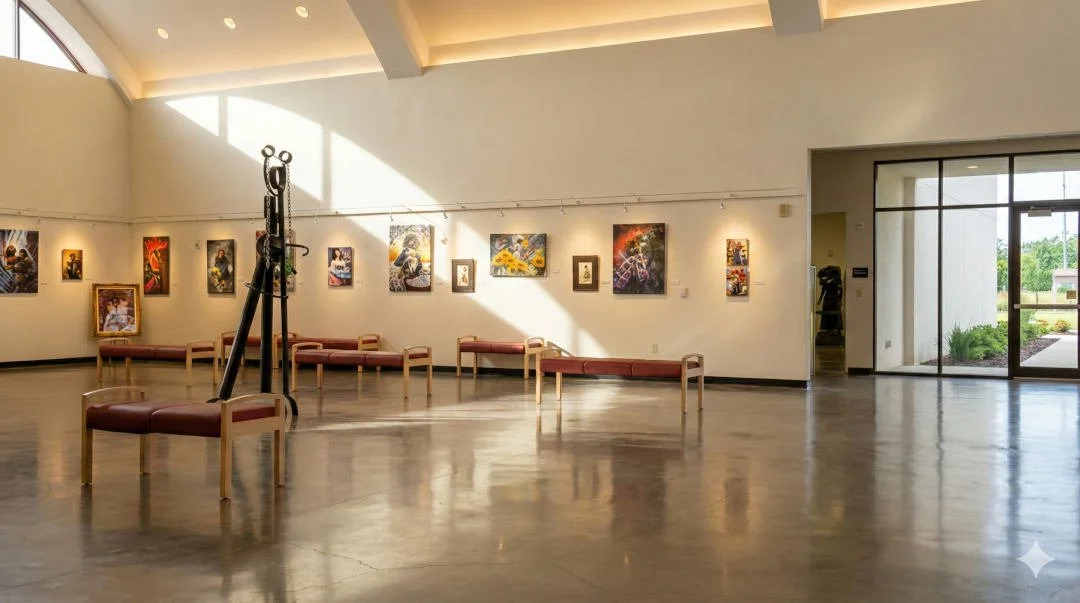
Northeast Louisiana Delta African-American Heritage Museum. Main gallery.
Not in our galleries.
We invite you to visit the Northeast Louisiana Delta African-American Heritage Museum and experience Don Cincone and Daryl Triplett in person. Some things are not meant to be downloaded.
Color is one of them. -
For more reading like this, explore our History & Art section.