Who Is Maggie Lena Walker?: Power Through Black Institutions
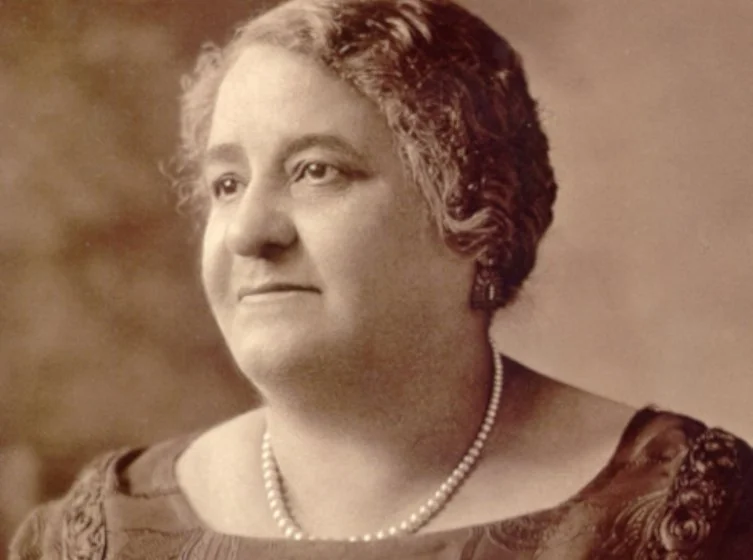
Maggie Lena Walker. Photograph by National Park Service, Maggie L. Walker National Historic Site. Licensed under CC BY 2.0, via Wikimedia Commons.
History often answers this deceptively simple question with a hurried checklist: banker, organizer, first woman to charter a bank in the United States. This summary, while accurate, is far from complete. And for those of us in Northeast Louisiana—where the legacy of Black institution-building is written into the soil of our communities—it offers a deeper lesson.
Maggie Lena Walker intentionally built things meant to stay, to be foundational, lasting for generations.
Born in 1864 in Richmond, Virginia, to Elizabeth Draper, a formerly enslaved woman, and Eccles Cuthbert, an Irish-born journalist and Confederate soldier, Walker entered a world being violently remade. Her parents did not marry—interracial marriage was illegal in Virginia at the time. Shortly after Maggie’s birth, her mother married William Mitchell, a Black man, and Walker was raised within Richmond’s Black community. From an early age, she understood that survival was not the same as security, and that if opportunity was ever going to exist for her people, it would not be granted—it would have to be built, deliberately and piece by piece.
Beginning her career as a teacher, Walker kept her attention fixed on the systems that governed Black life—how money moved, where trust was earned, and how institutions included or excluded by design. That focus crystallized in 1903, when she chartered the St. Luke Penny Savings Bank, becoming the first woman of any race to serve as president of a chartered American bank.
Walker understood that economic dignity required more than wages—it required access: to savings, credit, and ownership. Her bank served customers systematically barred from white financial institutions or forced into predatory lending. The St. Luke Penny Savings Bank financed homes, sustained businesses, and anchored Black families, its impact radiating far beyond Richmond—across the South and into the rural parishes of the Louisiana Delta.
If her contemporary Sarah Breedlove (Madam C. J. Walker) empowered the community through individual entrepreneurship and the art of reinvention, Maggie Lena Walker built the institutional scaffolding necessary to secure it. She created ledgers, policies, and buildings—structures durable enough to withstand political weather and survive the Great Depression. In 1930, the St. Luke Penny Savings Bank evolved into the Consolidated Bank and Trust Company, which endured until 2009.
A strategist of longevity, Walker’s influence extended far beyond banking. She founded the St. Luke Herald, using journalism as a tool of advocacy. She spoke publicly against lynching and fought for women’s suffrage. Through patience and endurance, Walker inscribed Black presence into histories never designed to record it.
So, who is Maggie Lena Walker? She is proof that leadership explicitly committed to Black collective power can overcome systems designed to exclude it.
At the Northeast Louisiana Delta African American Heritage Museum, we amplify the labor of quiet builders like her—recognizing that some legacies announce themselves, while others simply balance the books.
Series Footer
This post is part of a three-part essay series exploring Black leadership, power, and institution-building across time:
Who Is Maggie Lena Walker?