What’s Up With That?
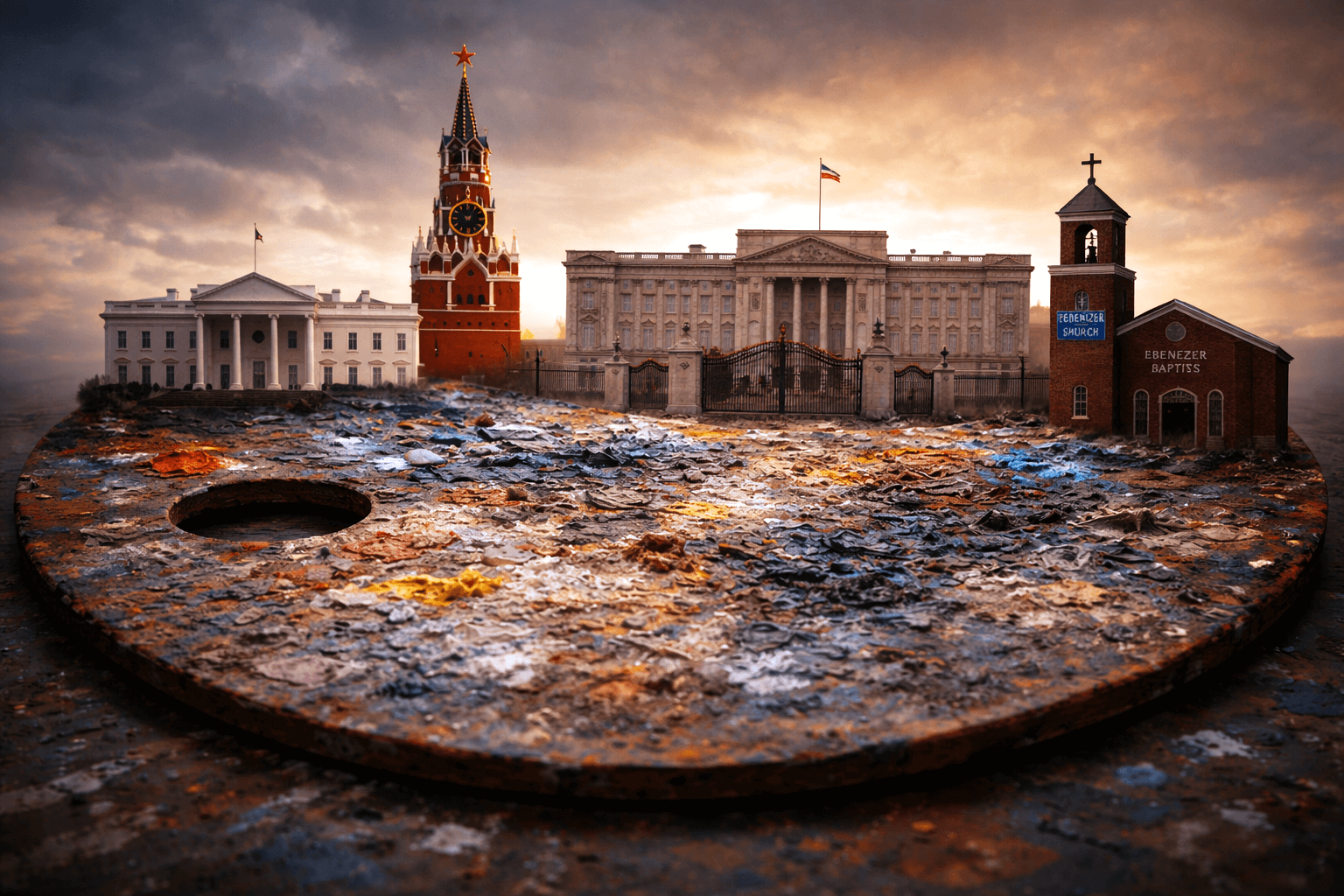
Power, Painting, and a Missing Record
The art world is well acquainted with powerful figures who pick up a paintbrush.
Former statesmen, monarchs, political heirs, and even disgraced leaders have left behind paintings—sometimes celebrated, sometimes debated, sometimes quietly preserved as historical curiosities. Their works circulate through auction houses, appear in exhibitions, and enter archives not because they are universally admired, but because who made them matters.
And yet, when we look closely at the historical record, something striking emerges:
there appears to be no documented tradition of Black political leaders—particularly those of the civil rights era—engaging in painting or drawing in a comparable, preserved way.
Not as a known pastime.
Not as a post-career practice—or even an archival footnote. What’s up with that?
Painting as a Byproduct of Power
History offers no shortage of examples where political authority and painting coexist.
Winston Churchill produced hundreds of oil paintings, many created during or after his time in office. His landscapes have been exhibited internationally and sold at major auction houses, including record-setting sales at Christie’s. His painting practice is often framed as therapeutic—a reflective counterbalance to leadership.
George W. Bush took up painting after leaving the White House. His portraits, particularly of wounded veterans, have been exhibited in museums and collected institutionally. Critical response varies, but the work’s legitimacy as art objects has never been in question.
King Charles III has long been a practicing watercolorist. His quiet landscapes have been published, sold, and widely discussed, often framed as evidence of introspection and continuity within monarchy. In this context, painting signals stability rather than escape.
Even the most troubling figures are not excluded from this record.
Adolf Hitler left behind hundreds of drawings and watercolors from his early life. Artistically unremarkable and ethically fraught, these works nonetheless appear regularly at auction, preserved and debated because of historical provenance rather than merit.
More recently, the artwork of Hunter Biden, son of former President Joe Biden, has entered the contemporary art market with gallery representation, significant prices, and public scrutiny. Debate has focused on access and influence, but the work itself has been collected, exhibited, and archived.
Across ideology, morality, and reputation, the pattern holds: power produces paintings, and institutions keep them. What changes is not whether the art exists, but who is allowed to have it remembered.
And Then, the Silence
Against this backdrop, the absence is unmistakable.
There is no comparable archive of paintings or drawings by Black civil rights leaders—figures who functioned, in many respects, as heads of a nation without a state. They negotiated with presidents, organized mass movements, shaped law, and articulated moral visions that transformed American democracy.
This silence does not prove such work never existed. But it does raise a harder question: why none appears to have survived, surfaced, or been recognized.
Conditions Matter
Painting is not simply an impulse. It depends on conditions. It requires time not constantly interrupted by threat, space not under surveillance, access to materials, and confidence that private expression will not be misread or weaponized. Many civil rights leaders lived without those protections. Their movements demanded total attention. Their private lives were rarely private. Even rest carried risk.
In the Delta, where the struggle for voting rights was a full-time occupation, the luxury of the easel was a world away.
Expression Was Not Absent—It Was Redirected
This is not a claim that Black creativity was missing from the movement. Where some leaders painted after power, many civil rights leaders lived inside the work. Black artists documented, interpreted, and amplified the era through painting, sculpture, printmaking, and design—often at great personal risk.
What is missing is something more specific: the familiar figure of the statesman-painter, whose creative leisure is preserved alongside speeches, policies, and portraits.
Creative expression during the movement flowed into forms that were portable, collective, and immediately legible—speech, song, sermon, protest graphics, poetry. These forms traveled quickly and met urgency. Easel painting, by contrast, is slow, solitary, and materially dependent.
Recognition and Preservation
Archives do not record everything. They record what institutions believe is worth keeping. When kings and presidents paint, their work is read as depth. When Black leaders labored, reflection itself was rarely afforded the same legitimacy.
Who is allowed to be multidimensional in the historical record? Who gets leisure without suspicion? Who is remembered as both leader and contemplative human being? These questions shape what survives.
Why This Absence Matters
Art history often begins by cataloguing objects.
But sometimes the most revealing object is the one that isn’t there. The absence of paintings by Black civil rights leaders does not suggest a lack of imagination or interior life. It points instead to unequal conditions—of safety, time, and recognition—that shaped what could be made, what could be saved, and what institutions chose to value.
When we see paintings by Churchill, Bush, King Charles III, Hunter Biden, and even Hitler preserved, sold, and debated—while finding no comparable record among Black political leaders—we are not looking at coincidence.
The Museum’s Role
At the Northeast Louisiana Delta African American Heritage Museum, we look for what history did not preserve on canvas. We attend to stories written instead in labor, language, land, and collective memory.
Not every legacy leaves behind a painting. Some are written in the soil and the soul. Asking why that is remains one of the most honest forms of historical work.
To add to this conversation, contact us.