Is Art School Worth It for Young Black Artists?
Exploring the Value, the Cost, and the Alternatives
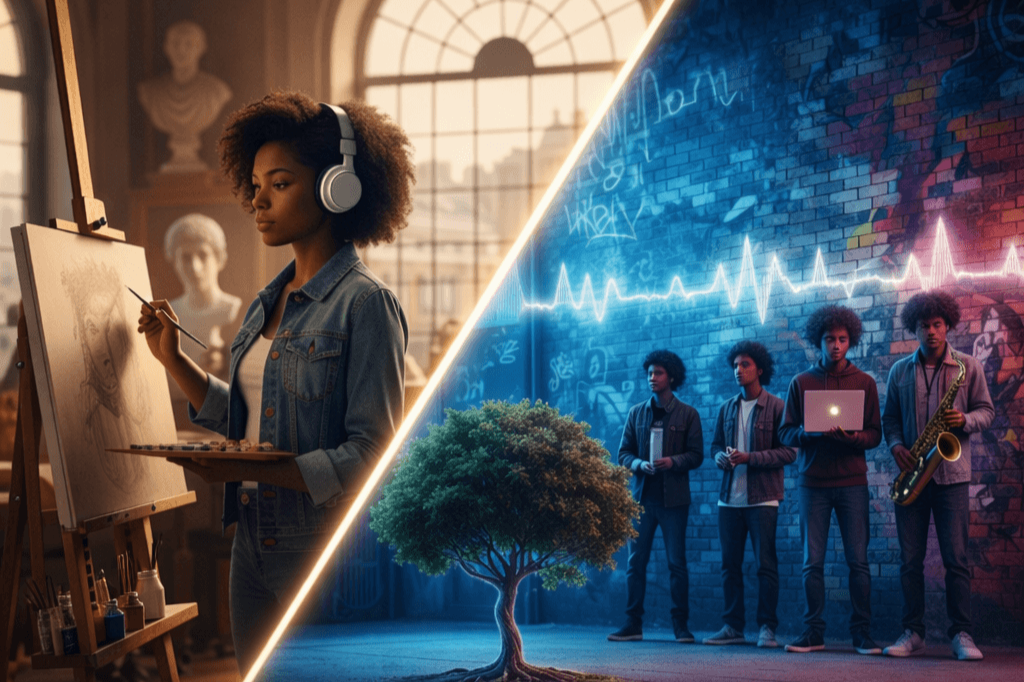
A young artist stands at a familiar crossroads. They draw constantly. Teachers notice. Family members encourage them. Someone asks the inevitable question: “Have you thought about art school?”
For many young Black artists—and for the families supporting them—this question carries more weight than it might seem. It is not simply about talent or passion. It is about cost, access, representation, and whether the path ahead is sustainable.
At the Northeast Louisiana Delta African American Heritage Museum, we believe this is an important conversation to have openly and honestly. The decision to pursue formal art education is significant, and there is no single answer that fits every artist.
Learning Beyond the Academy
Historically, Black artists have not always been welcomed—or supported—within formal art institutions. As a result, many learned their craft through other means: mentorships, apprenticeships, community workshops, churches, cultural centers, and self-directed study.
This tradition of learning outside the academy is not a lesser alternative; it is a foundational part of Black artistic history. Artists such as Jacob Lawrence, Elizabeth Catlett, and Romare Bearden developed their voices within networks that valued community knowledge, shared resources, and cultural continuity.
That legacy continues today. From local collectives to museum programs and online communities, Black artists have long understood that education does not belong exclusively to classrooms or campuses.
What Art School Can Offer
At its best, art school provides structure, sustained feedback, and access to resources. Students may benefit from rigorous studio practice, critical dialogue, and exposure to art history and theory. Being surrounded by peers who are equally committed to their craft can accelerate growth and sharpen creative vision.
Art school can also offer time—protected time to focus on making work. For some artists, this immersive environment builds confidence and opens doors to residencies, exhibitions, and professional networks.
These are meaningful benefits. But they are tools, not guarantees.
The Real Costs
Formal art education comes with real risks that deserve careful consideration. Tuition costs continue to rise, and many graduates carry long-term debt into careers that are often unpredictable. A degree alone does not ensure financial stability, representation, or opportunity.
There is also the question of cultural experience. Many Black artists describe navigating programs where their perspectives are underrepresented or misunderstood. This can create emotional strain and require additional labor simply to be seen or heard.
For young artists and their families, approaching this decision with a realistic perspective—financially, professionally, and personally—is an essential part of creative preparation.
Other Paths to Growth
Art school is one path among many. Increasingly, artists are building careers through alternative routes: community-based programs, residencies, apprenticeships, online learning platforms, and self-directed studio practice.
Today’s creative landscape also includes expanding digital opportunities—illustration, design, animation, and multimedia work—that may or may not require traditional degrees. Closer to home, regional arts organizations, museums, and local mentors continue to play a vital role in nurturing talent across Northeast Louisiana and beyond.
These pathways are not secondary options. They are intentional choices that have supported artists for generations.
A Better Question
Rather than asking, “Is art school worth it?” a more useful question may be:
“What do I need right now to grow as an artist?”
Some artists need structure. Others need mentorship, access to materials, or connection to community. Many benefit from a combination of formal study and independent exploration.
There is value in recognizing that growth looks different at different stages—and that no single path defines artistic legitimacy.
The Museum’s Perspective
As a cultural institution, we honor education in all its forms. We celebrate artists who have learned in universities, in community spaces, in studios, and through years of disciplined practice.
Our role is not to prescribe a destination, but to affirm that young Black artists belong in the creative world—and that their paths, however they unfold, are worthy of respect and support.
Through exhibitions, programs, and conversations like this one, the Museum remains committed to helping artists and families think critically about opportunity, history, and possibility.
In Closing
There is no universal answer to whether art school is “worth it.” But asking the question thoughtfully is an important step. Choosing a path with clarity and intention is itself a form of education.
We invite young artists, educators, and community members to continue this conversation—to reflect on their own journeys and to share the ways learning has shaped their creative lives. The Museum exists not only to preserve history, but to support the decisions that will shape the future of Black art in our region and beyond.