Art of War
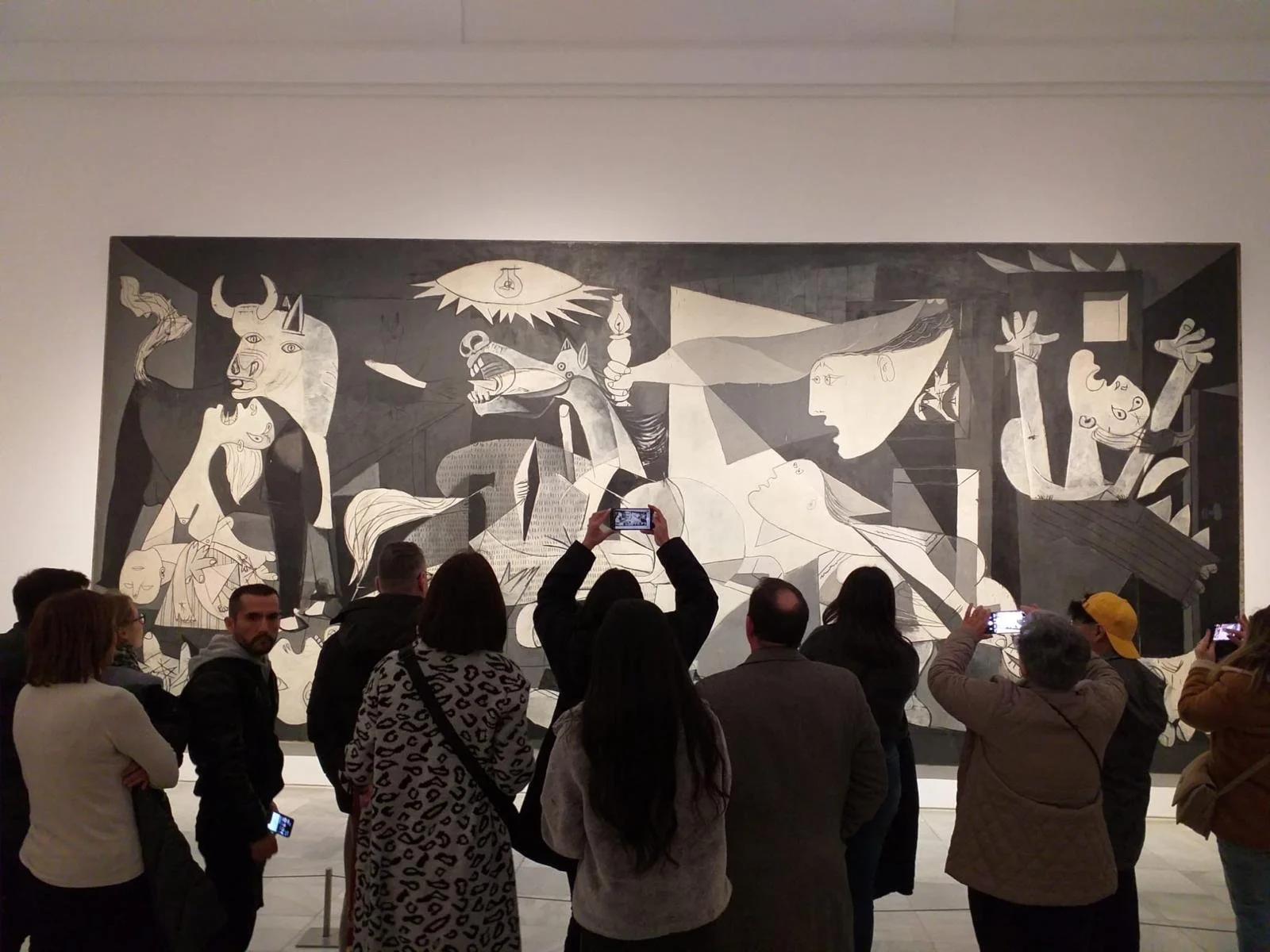
People and Guernica (front) by Ertly, via Wikimedia Commons (CC BY 4.0).
A Canvas That Indicted a Century
On April 26, 1937, Nazi warplanes flew in support of Spanish general and dictator Francisco Franco’s fascist forces and carpet-bombed the Basque town of Guernica on a market day. It was a deliberate act of terror against civilians — an experiment in what modern warfare could do to ordinary people who had simply gone out to buy vegetables and bread. The town burned for three days.
Pablo Picasso was in Paris when he heard the news. Within days he was at his canvas. In five weeks he produced Guernica — an eleven-by-twenty-five-foot howl in black and white and gray. A horse collapsing. A mother with a dead child at her breast. A lamp thrust into darkness. A soldier’s broken body. No flags. No politics. No villain named. Just the fact of it, rendered so completely that no one who has stood before that painting has ever left unchanged.
In 2003, when American officials arrived at the United Nations to make the case for the invasion of Iraq, someone ordered the tapestry reproduction of Guernica that hangs outside the Security Council chamber to be covered with a blue curtain. The official explanation was that it made a better television backdrop. But the image of diplomats covering Guernica to speak about war became its own statement — and circled the globe.
Picasso understood what that curtain confirmed — that art in the right moment does not merely reflect history. It intervenes in it. And Power fears it enough to cover it up.
A Tradition That Was Never Optional
African American artists have always known what Picasso discovered in 1937. They have never had the luxury of not knowing it. When your life and the lives of your people are the subject of the atrocity, the distance between art and survival collapses.
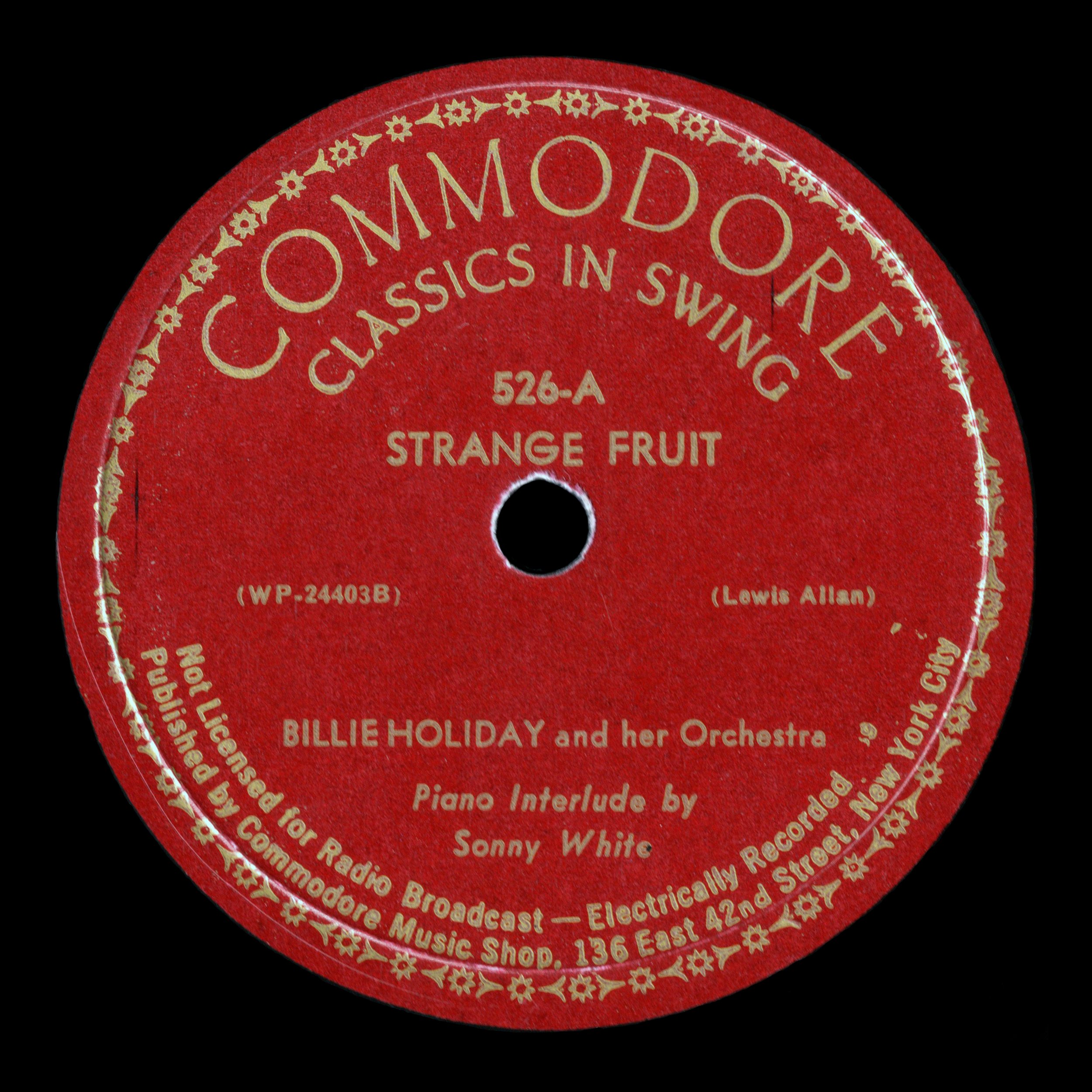
Commodore Records 78 label for “Strange Fruit” by Billie Holiday and Her Orchestra (1939), Commodore Records. Public domain, via Wikimedia Commons.
In 1939, Billie Holiday walked to a microphone and sang Strange Fruit — a poem set to music about the bodies of Black men hanging from Southern trees. Her own label, Columbia Records, refused to record it. She found a smaller label and recorded it anyway. The NAACP called it the beginning of the Civil Rights Movement.
James Baldwin sat down in 1963 and wrote two long letters — one to his nephew, one to the country — and published them together as The Fire Next Time. They appeared first in The New Yorker, which meant they landed in the living rooms of exactly the people who most needed to be troubled by them. Baldwin did not argue. He testified, describing the interior experience of being Black in America with a precision and a fury that made turning away feel like a moral failure. It is the closest that American prose has come to the function Guernica serves in paint.
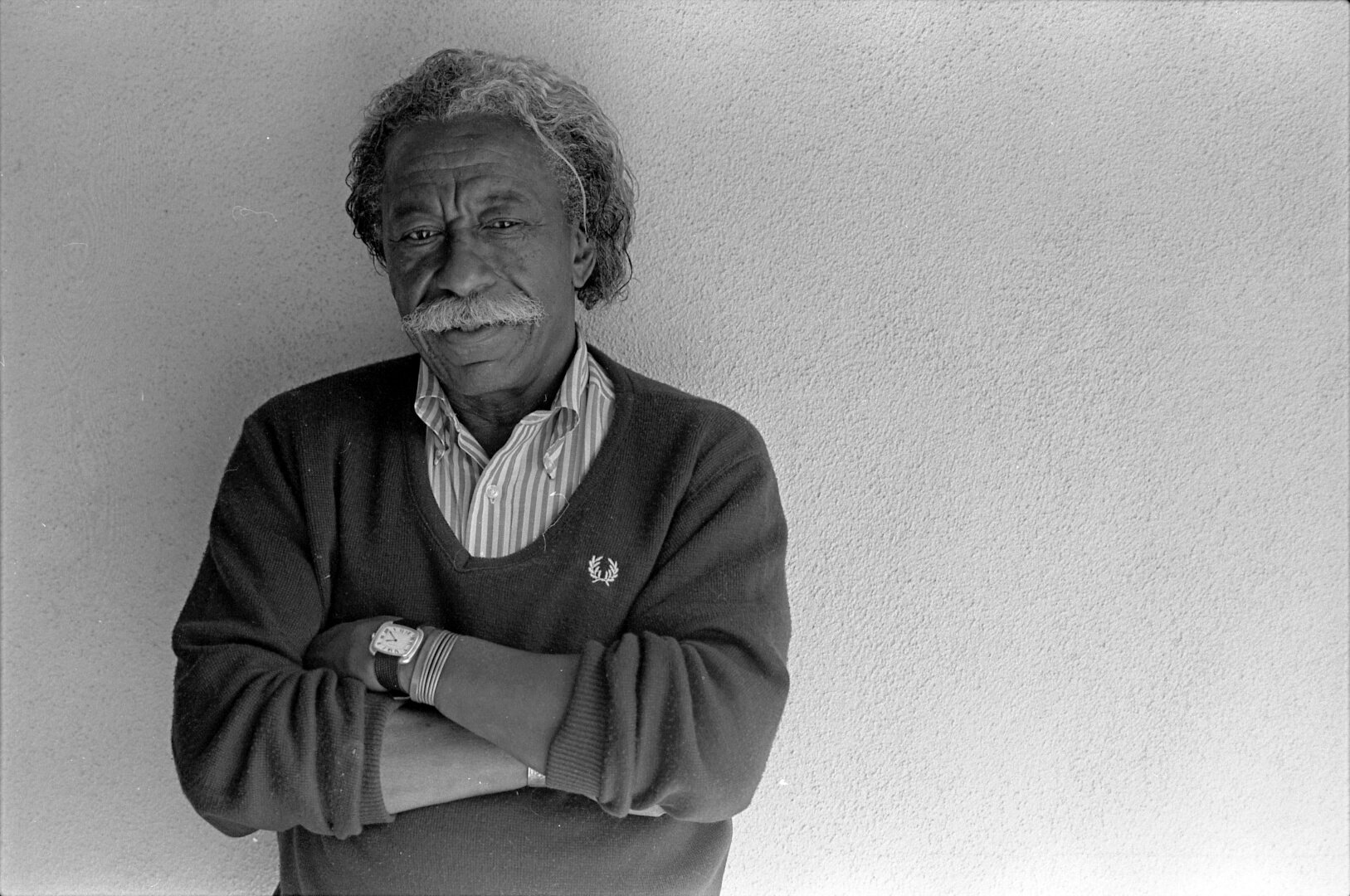
Gordon Parks, photograph by Iris Schneider, Los Angeles Times, 1984. Via Wikimedia Commons (CC BY 4.0).
Gordon Parks picked up a camera and understood it the way a soldier understands a rifle. As the first Black staff photographer at Life magazine, he knew the reach of that publication and used it deliberately. His photographs of Jim Crow — the segregated water fountains, the humiliating daily arithmetic of second-class citizenship — brought what Black Americans lived every day into the living rooms of white Americans who had chosen not to see it. He once said the camera was his weapon of choice.
Jacob Lawrence painted his Migration Series at twenty-three years old. Sixty panels, bold and flat and unsparing, documented the Great Migration of Black Americans from the rural South to the industrial North. He gave the migration the visual grammar of an epic — the same grammar that had always been reserved for European history. Fortune magazine ran half the panels in 1941, and brought them to a mass audience. Lawrence understood that Black history had to be painted as history, not footnote.
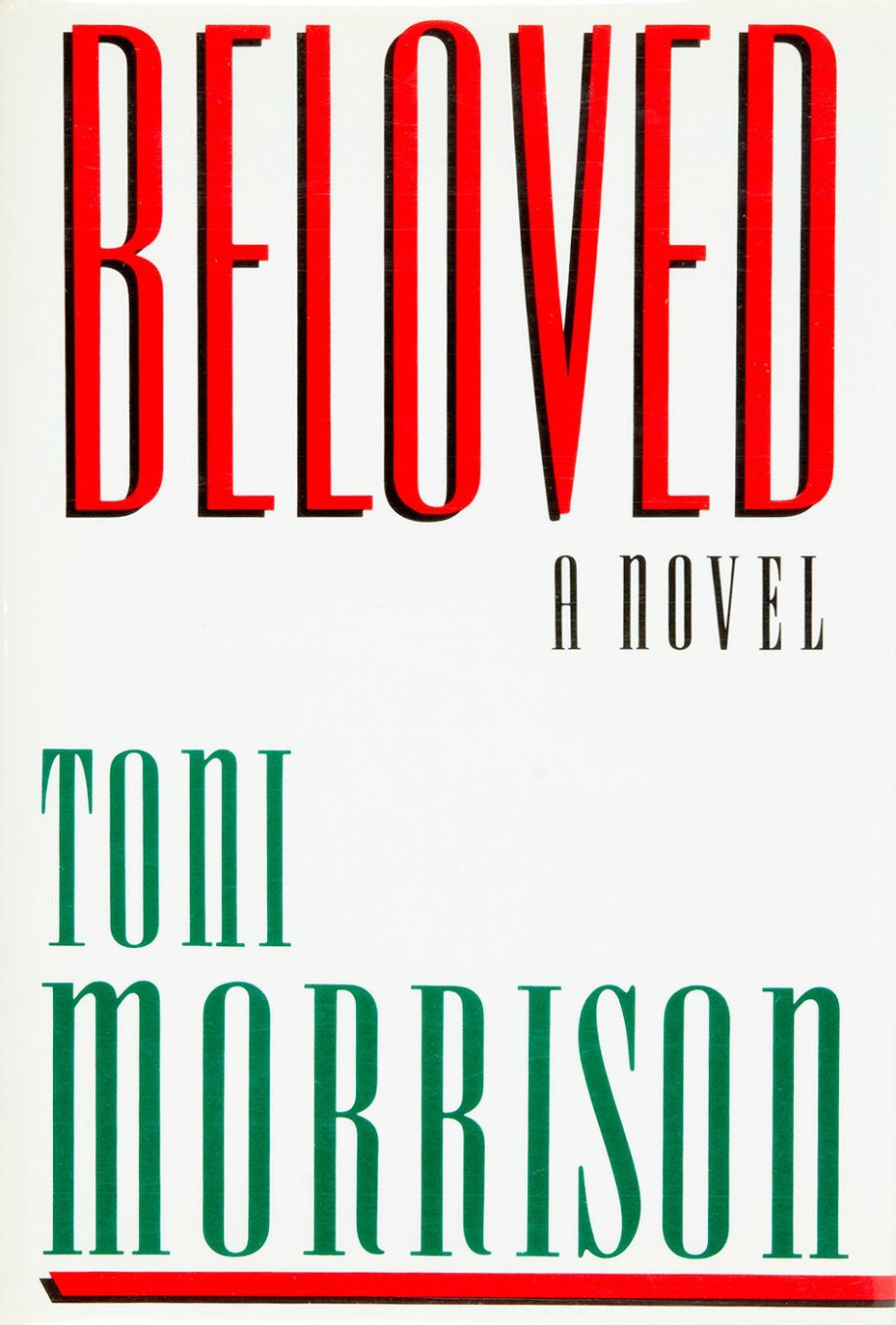
First-edition dust jacket cover of Beloved (1987) by Toni Morrison, jacket design by R. D. Scudellari, Alfred A. Knopf. Public domain, via Wikimedia Commons.
Toni Morrison wrote Beloved because the true psychological interior of slavery had never been told in a way that made the reader inhabit it. Based on the real story of an enslaved woman who killed her child rather than let her be returned to bondage, Morrison did not let history stay at a comfortable distance. The book won the Pulitzer and remains one of the most argued-over works in American schools.
None of these artists made arguments in the conventional sense. They did not lobby or petition or debate. They bore witness in a way that made looking away feel like complicity. That is the specific power of art that no other form of human communication replicates.
This is That Moment
We are not observers of a distant history now. We are inside one. Institutions that took generations to build are being tested in ways that reveal how fragile they always were. Across the country, communities like ours watch and feel something recognizable, even if they struggle to name it. The architecture of it is familiar.
Billie Holiday did not wait until historians confirmed what she already knew. Baldwin did not wait for permission to pull the fire alarm. Parks did not wait for a more comfortable moment to raise and aim his camera. The moment calls for the response.
Call of Duty
We do not know where the next Guernica will come from. We do not know which Delta artist is painting the image, writing the song, or shaping the poem that will crack something open in American consciousness the way Strange Fruit did. We do not know what is next to get covered with a blue curtain because Power fears what it says.
What we do know is that the work needs to be made. Right now. With the full force of a community's collective talent.
Pick up the paintbrush. Step to the microphone. Point the camera. Write the play. Throw the pot. Make the thing. Tell the truth about this moment because that tradition has always mattered.
Question for Our Community
The Northeast Louisiana Delta African-American Heritage Museum exists to honor exactly this tradition — and to record what survives being lost or suppressed.
We are considering an exhibition in that spirit: new work from Delta artists responding to this moment — not as political illustration, but as testimony that speaks to now. Would such an exhibition matter to you? Would you come? Would you submit work? Click here to let us know.
The next Guernica might be in the Delta.