The Alchemy of Value: How Artists' Work Moves from the Margins to the Asset Class
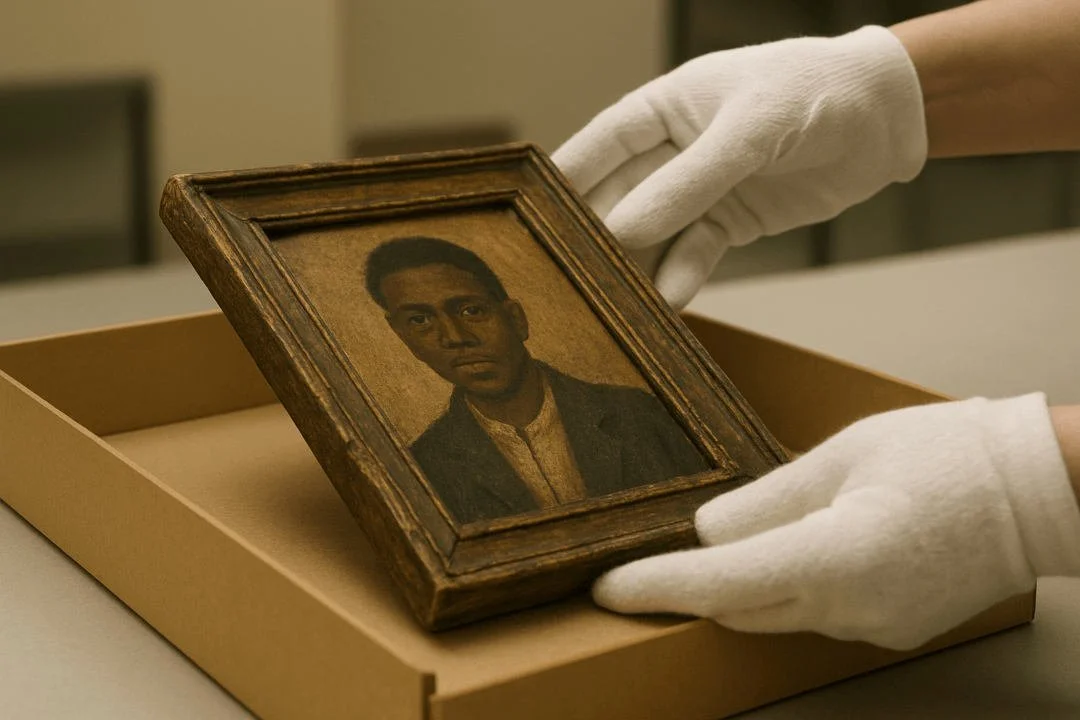
In the world of art, the distance between a discarded canvas in a thrift store and a record-breaking masterpiece at Sotheby's can seem insurmountable. One day, a painting is worth the cost of its frame; decades later, it is worth the GDP of a small nation.
How does this transformation happen? What turns pigment on canvas into a global financial asset?
The process isn't magic. It is a form of alchemy, a carefully orchestrated build-up of consensus, credibility, and cultural timing. Here at the Northeast Louisiana Delta African-American Heritage Museum, we are often the very first step in that long journey.
The $110.5 Million Peak: Jean-Michel Basquiat
In May 2017, the art world was shaken when Jean-Michel Basquiat’s painting, Untitled (1982), sold at auction for a staggering $110.5 million. It set a record as the most expensive painting by a Black artist ever sold, and at the time, the most expensive by any American artist at auction.
The painting, a raw, energetic depiction of a skull-like head, is a masterpiece of Neo-Expressionism. But its value wasn't always obvious to the market. Just 33 years earlier, in 1984, that same painting was purchased by private collectors for $19,000. While a significant sum for a young artist at the time, it is a fraction of its eventual worth.
What happened in those intervening years? Basquiat’s work moved from the realm of "contemporary painting" into the realm of "art history." Through museum exhibitions, critical analysis, and the sad mythology of his early death, his work became a "blue-chip" asset—a piece of cultural property that the world's wealthiest collectors agreed was essential to own.
The $10 Treasure: History Hidden in Plain Sight
At the other end of the spectrum lie stories of incredible cultural value hidden for pennies.
In 2023, a shopper at a Pennsylvania thrift store bought a small landscape painting for just $10. After researching the signature, they discovered it was a rare 1864 watercolor by William H. Dorsey, a prominent Black artist, historian, and collector from 19th-century Philadelphia. It is believed to be one of the only surviving paintings by his hand.
Similarly, a missing panel from Jacob Lawrence’s iconic Struggle series spent 60 years hanging in an apartment, its owners having bought it for a pittance at a local charity auction in 1960. Today, other panels from that series sell for hundreds of thousands of dollars.
These stories highlight a critical truth: artistic value is not inherent in the object. It is constructed by context. Without the knowledge of who William H. Dorsey was, his painting was just a $10 decoration. With that knowledge, it became an invaluable piece of African-American history.
Decoding the Alchemy: How Value is Created
So, how does an artist move from obscurity to collectibility? It is a game of signals. For art to become a financial asset, a consensus must be built among gallerists, curators, critics, and collectors.
Traditionally, this "credibility ladder" looked like this:
Vetting: Graduating from a prestigious art school or attending a top-tier residency.
Representation: Being signed by a gallery that places work with "safe" collectors who won't immediately resell it.
Validation: Getting reviewed by major critics and, crucially, being acquired by museums.
Today, new signals have emerged. A celebrity endorsement can instantly catapult an artist to fame, sometimes bypassing institutions altogether.
The Foundation: The Role of Our Museum
This is where institutions like the Northeast Louisiana Delta African-American Heritage Museum play a vital, foundational role.
Before an artist can achieve aesthetic validation in the wider contemporary art market, they often first need cultural validation. When we exhibit an artist, we are telling the world: "This work has a narrative. It speaks to the history, identity, and soul of this community. It matters."
For an artist shown in our halls, the next incremental step toward wider credibility isn't necessarily a New York gallery. It's often inclusion in a curated group show at a university gallery or a non-profit art space, where their work is placed in conversation with broader art historical themes.
Our mission is to recognize and preserve our heritage before it ends up in a thrift store bin, unacknowledged. By documenting and celebrating the artists of our region, we provide the essential bedrock upon which future history and future value is built. We ensure that the alchemists of the future know exactly whose stories they are looking at.
The Future of History
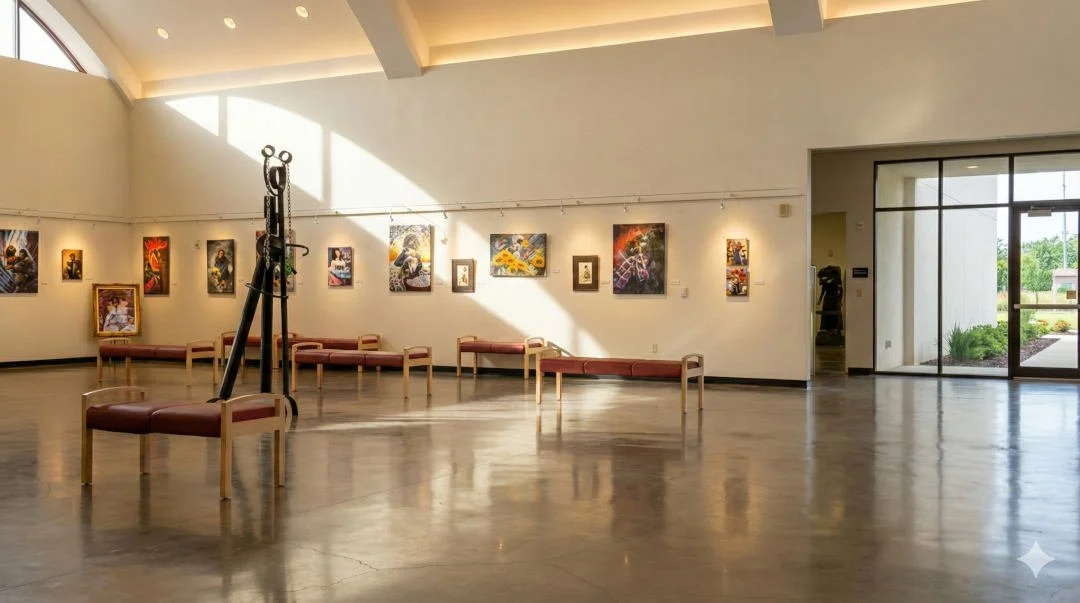
Main Gallery, Northeast Louisiana Delta African-American Heritage Museum.
History shows us that the difference between a lost treasure and a museum masterpiece is often just recognition. By supporting the Northeast Louisiana Delta African-American Heritage Museum, you are preserving the past and actively participating in the future value of our community's creators.
When you visit our exhibitions, purchase art from our local events, or become a member, you provide the critical first layer of legitimacy that every artist needs to rise. You help us document their names, archive their stories, and build the platform that elevates them from "local talent" to "collectible voices."
Join us today. Whether by donation, membership, or simply making a purchase from our shop, you are the catalyst that ensures the next generation of masters receives the recognition—and the value—they deserve right now.
[Become a Member] | [Attend Our Christmas Gala] | [Make a Donation] | [Buy a Museum T-shirt or Cap]